Screen Printing vs Embroidery: Which One Should You Choose for Custom Apparel?
Bold graphics or premium texture? High-volume events or corporate professionalism? Let's break down the real trade-offs so your custom merch actually works for your brand.
You finally nailed the design. The logo is sharp, the colors feel right, and you can already picture someone wearing your hoodie at a weekend farmer's market or walking through the office hallway. Then you sit down to order and hit the wall: screen printing or embroidery?
Ask ten sellers in online groups and you'll get nine different opinions. Die-hard embroidery fans will tell you screen printing feels cheap. Screen printing advocates will argue embroidery is overkill for t-shirts. Nobody gives you a straight answer.
Here's the thing: neither method is "better." They're completely different tools, built for completely different jobs. Choose wrong and you'll blow your budget on disappointing results. Choose right? That's how you build brand credibility and get people actually wearing—and keeping—your merch for years. Let's cut through the noise and figure out which one actually fits your next drop.
🗣️ From community discussions: "I screen printed my first 200 units because it was cheaper. The detail looked great—on day one. After six months of regular use, the design started cracking around the edges. Switched to embroidery for the next run and never looked back. It cost more upfront, but four years later those hoodies still look sharp." — Jordan, apparel brand owner.
First, How Do These Methods Actually Work?
Before we dive into pros and cons, let's quickly understand what's happening under the hood. Both methods have been around for decades, but the technology has evolved significantly.
Screen printing (sometimes called silk screening) pushes ink through a mesh screen onto fabric. Each color in your design needs its own screen. Modern screen printing uses high-density inks, computerized registration systems, and heat-curing tunnels to lock the ink into the fabric. The result is a flat, vibrant print that sits on top of the fibers. For multi-color designs, you're essentially building the image one layer at a time——like an analog version of CMYK printing but much more durable[reference:0].
Embroidery uses computerized sewing machines to punch thread directly into the fabric thousands of times per design. Your artwork has to be "digitized" first——converted into a special stitch file (DST or PES format) that tells the machine exactly where to move. The machine then stitches the design using multiple thread colors (typically limited to 12–15 per design). What you get is a raised, three-dimensional logo that feels substantial and premium. Embroidery doesn't just decorate the fabric——it becomes part of it[reference:1][reference:2].
Already you can see the fundamental tension: screen printing gives you flat, vibrant graphics. Embroidery gives you textured, dimensional logos. One prioritizes color and complexity. The other prioritizes feel and longevity. Let's see how that plays out across the factors that actually matter to small brands.
Screen printing changes the fabric's surface. Embroidery changes the fabric's structure. That's why they feel different, age differently, and work on different types of garments. One isn't "higher quality" than the other——they're just different tools for different jobs.


Cost Structures: Where Your Budget Actually Goes
This is where most people get tripped up. They compare per-unit prices without understanding where the money actually goes. Let's break down real numbers from 2026[reference:3][reference:4].
Screen printing has high setup costs but low per-unit costs at volume. You pay $30–$75 per color to create screens. A 4-color logo means $120–$300 just in setup fees. But once those screens are made, printing additional shirts is fast and cheap——hundreds per hour. That means at 24 units, per-unit pricing is brutal. At 500 units? That setup cost gets spread so thin it almost disappears. A basic one-color print on a cotton tee can cost as little as $2–$3 per unit in bulk[reference:5]. At 100+ items, multi-color designs drop to $3–$6 each[reference:6].
Embroidery flips the model. Setup is minimal (digitizing fees run $20–$100 one-time), but every piece takes time——lots of time. And time costs money. Per-unit pricing typically runs $5–$15, driven almost entirely by stitch count[reference:7]. A small chest logo (2,000–5,000 stitches) might cost $3–$5 per shirt. A full back design (15,000+ stitches) could run $15–$20. The per-unit cost doesn't drop much with volume because each piece still needs machine time[reference:8].
The breakeven point? Typically around 50–100 pieces. Below that, embroidery often makes sense (no heavy setup fees). Above that, screen printing usually wins on total cost[reference:9]. For orders of 100+ pieces, screen printing almost always offers better value. For smaller quantities or premium items, embroidery's superior appearance often justifies the higher cost[reference:10].
💸 Quick Cost Summary Table
| Factor | Screen Printing | Embroidery |
| Setup cost | $30–$75 per color | $20–$100 digitizing (one-time) |
| Per-unit cost (50 pcs) | $6–$12 (varies by colors) | $5–$15 (depends on stitch count) |
| Per-unit cost (200 pcs) | $3–$6 | $4–$12 |
| Main cost driver | Number of colors | Stitch count + design size |
| Best value at: | 100+ pieces | Small runs (under 50) |
A cautionary tale from the seller community: one brewery wanted their detailed hop illustration printed on 200 t-shirts. Embroidery quote: $18 per shirt. Screen printing quote: $6 per shirt. They saved $2,400 by choosing the right method[reference:11]. On the flip side, a startup ordering 25 custom hats found screen printing prices prohibitive because setup fees (multiple colors) ate them alive. Embroidery handled the small run beautifully with no minimum order requirements[reference:12].
Durability and Longevity: What Actually Lasts?
This is where embroidery puts on its heavyweight belt. Because the thread is stitched directly into the fabric, embroidered logos don't crack, peel, or fade. They can last the entire lifetime of the garment——and often outlast it. Uniforms for trades, workwear, and gear that gets washed constantly almost always use embroidery for this exact reason[reference:13][reference:14].
One HVAC company learned this the hard way. Their screen-printed staff uniforms started looking worn after just two seasons——faded, cracked, and unprofessional. They switched to embroidered logos on higher-quality polo shirts. The initial investment rose by 40%, but employee feedback was overwhelmingly positive, and four years later the uniforms still looked sharp[reference:15]. Independent textile studies show that high-quality embroidery retains 90% of its original appearance after 50 industrial wash cycles. Standard plastisol screen prints begin degrading as early as 15–20 washes[reference:16].
Screen printing doesn't need to be fragile, though. A well-done screen print with quality inks and proper curing can last hundreds of washes when cared for correctly——turned inside out, washed cold, no bleach, no dryers on high heat. But the margin for error is smaller. Poorly cured plastisol might crack after just a few washes[reference:17]. That's why event tees and promotional giveaways often default to screen printing——they're designed for high-volume affordability, not decade-long durability.

🗣️ Community voice: "After five years and hundreds of washes, our embroidered staff uniforms still look sharp. The screen-printed ones from the same batch? Faded beyond recognition." — Operations manager, fitness chain.
Design Detail: What Your Artwork Actually Needs
This is the trap that catches most brand owners. They fall in love with embroidery's premium feel and try to force a complex design through a needle. Then they're disappointed when fine lines blur and gradients disappear. Thread has limits. Understanding those limits saves you from expensive mistakes[reference:18].
Screen printing handles complexity like a champ. Fine lines? No problem. Gradients and shading? Absolutely. Photo-quality images? Yes, through simulated process printing. Unlimited color mixing? With enough screens, yes. The ink lays down exactly what you give it. That's why streetwear brands, band merchandise, and event apparel almost always use screen printing——the artwork can be as detailed as you want[reference:19][reference:20].
Embroidery demands simplicity. Bold shapes. Clean lines. Not too small——text under about a quarter inch high starts to blur. Not too many colors——typically maxed at 12–15 thread colors. No gradients or shading (thread changes are discrete steps). But when that simple logo hits, it hits differently. The raised texture catches light, feels substantial in hand, and communicates "attention to detail" in a way flat ink never can[reference:21].
One high school learned this when designing spirit wear. They initially considered embroidery for their detailed mascot on the chest. But the image had too many colors and fine lines for effective stitching. They opted for screen printing instead. The result was a vibrant, accurate reproduction at half the cost.[reference:22]
Here's the harsh truth: if you force a complex design into embroidery because you think it looks "more premium," you'll end up with something that looks worse than if you'd just screen printed it. The thread will simplify your design whether you want it to or not. Work with that limitation, don't fight it.[reference:23]
If your design has gradients, tiny text, intricate patterns, or photo elements → screen printing.
If your logo is bold, simple, mostly text or solid shapes → embroidery.
If you're still unsure, request a digitizing preview from your embroidery provider. They'll show you how the design translates to thread before you commit.
Minimum Order Quantities: The Hidden Constraint
For small brands and startups, MOQ might be the biggest deciding factor. The difference between the two methods is dramatic[reference:24][reference:25].
Screen printing typically requires 24–100 pieces to be cost-effective. Some suppliers will do less, but the per-unit price climbs fast because setup costs don't shrink. At 12 pieces with a 4-color design, you might pay $15–$20 per shirt. At 100 pieces of the same design, you might pay $5. That's not a small difference——it's the difference between a profitable order and a money-losing disaster[reference:26].
Embroidery often has no MOQ at all. Digitizing is a one-time cost ($20–$100), after which you can order just 1 piece. Need 5 custom polo shirts for your executive team? Embroidery handles it perfectly. The per-unit price stays stable regardless of volume because the main cost is machine time, not setup. That's why startups, small clubs, and limited-edition merchandise often default to embroidery——they don't have to bet big to get started[reference:27][reference:28].
A boutique brand owner in online groups described testing both: "We needed 25 polos for our pop-up event. Screen printing quotes were brutal because of screen setup. Embroidery cost $9 per shirt plus a flat $50 digitizing fee. Total cost under $280. We would have been forced into 100 units with screen printing. That extra inventory would have sat for months."
📦 MOQ Recommendation Guide
- Under 24 pieces: Embroidery практически always wins. No huge setup costs. Some screen printers won't even take orders this small.
- 25–100 pieces: Depends on design complexity and garments. Simple 1-2 color screen print might still work; detailed artwork may push you toward embroidery or mid-volume screen printing.
- 100+ pieces: Screen printing becomes dramatically more cost-effective. The setup costs amortize beautifully across volume.
- 500+ pieces: Screen printing dominates. Full stop. Embroidery's per-unit floor is higher than screen printing's volume pricing.
Garment Types: Not All Fabrics Are Created Equal
Here's something that beginner brand owners overlook constantly. The garment you choose heavily influences which method works[reference:29][reference:30].
Screen printing works on almost any fabric——cotton t-shirts, polyester blends, performance materials, hoodies, bags. It's universally compatible because the ink sits on top of the surface. Lightweight fabrics? No problem. Stretchy fabrics? Special inks handle them. The main limitation is that certain inks require certain fabric types (water-based inks work best on 100% cotton, for example), but there's usually an option that works.
Embroidery needs "meat" to grab onto. Polos, hats (structured caps especially), jackets, canvas bags, denim, fleece hoodies——these hold stitches beautifully. But lightweight t-shirts? Thin performance fabrics? The stitches can pucker and distort the fabric. The stabilizer backing helps, but thin fabrics still struggle under the tension of thousands of stitches pulling through[reference:31].
That's why you rarely see embroidered thin cotton tees. The final result feels stiff in that spot, and the fabric may bunch up around the design. It works technically but rarely looks or feels premium.
Embroidery wins on: Polo shirts, structured caps, jackets, fleece hoodies, canvas totes, denim jackets——anything with body and structure.
Screen printing wins on: T-shirts, hoodies (large chest/back graphics), performance wear, tri-blends——anything soft and flexible or where you want the fabric to drape naturally.
Aesthetic Feel: Flat vs. Textured
A surprising number of buyers don't think about this until they hold the finished product. How does it feel to wear? How does it look in natural light?
Screen printing produces a smooth, flat design that blends into the garment's drape. With soft-hand water-based inks, you can barely feel the print at all. Plastisol inks sit slightly on top of the fabric, creating a subtle texture but still comfortable. For large chest graphics or all-over designs, screen printing's smooth finish is the only practical option. Embroidery on a large chest area would be heavy, expensive, and uncomfortable[reference:32].
Embroidery creates a raised, three-dimensional texture that catches light differently. The logo has presence——not just visually but literally. You can run your finger across it and feel the craftsmanship. That tactile experience communicates something intangible but powerful. In a 2026 swag survey, over 53% of buyers expressed strong interest in premium decoration methods like embroidery specifically because texture was trending[reference:33].
That said, embroidery can be too much on lightweight fabrics. A giant embroidered back design on a thin tee pulls the fabric down, feels heavy on the shoulder, and can make the garment sit weirdly. Screen printing's flat application is much more subtle and comfortable for day-to-day wear.[reference:34]
There's also a middle ground for those who want the best of both worlds. Many successful brands combine the two: embroidered chest logo (professional, polished) paired with a larger screen-printed back graphic (bold, eye-catching). It's more expensive than using one method, but for premium merchandise launches, the layering effect can be stunning.
🗣️ From the seller community: "Our team hoodies have embroidered logos on the chest——looks professional in meetings and networking events. The back is screen-printed with our brand tagline and a large graphic——that's for streetwear energy and photo moments. Best of both worlds." — Tyler, streetwear brand owner.
Real-World Use Cases: What Successful Brands Are Doing
Let's move from theory to practice. Which method are actual small brands choosing for which products in 2026?
🎯 Screen Printing Is Best For:
- Event tees and fundraisers – High volume, low per-unit cost, bold colors
- Streetwear drops and band merchandise – Artistic designs, photo elements, complex graphics
- Team uniforms (sports leagues, corporate teams) – Large numbers on backs, names, logos – screen printing handles text beautifully and stands up to game-day wear
- Promotional giveaways at scale – 500+ pieces for trade shows, product launches
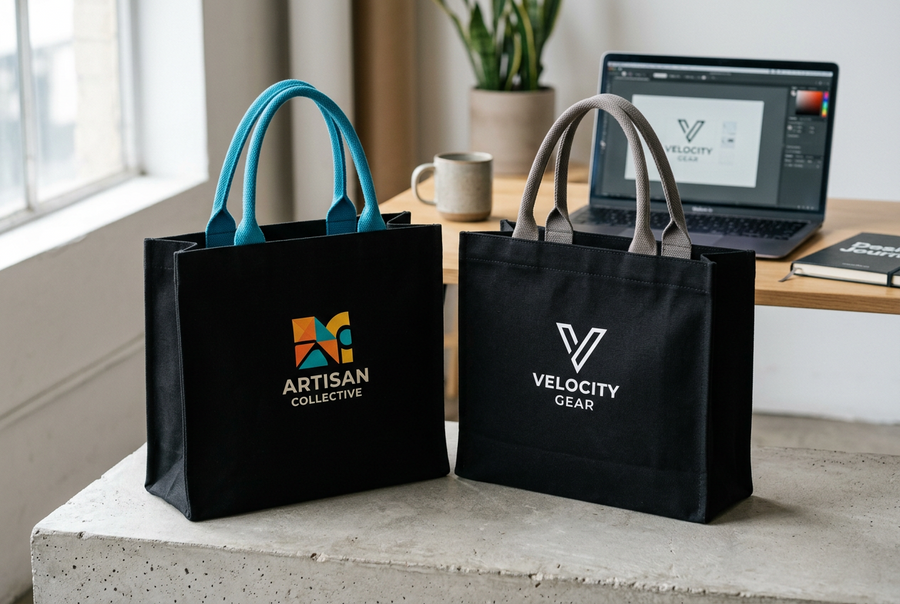
- Tote bags and accessories – Screen printing handles flat surfaces well[reference:35][reference:36]
🎯 Embroidery Is Best For:
- Corporate uniforms and professional wear – Polo shirts, blazers, button-downs where image matters
- Hats and caps – Structured hats are embroidery's natural habitat. Screen printing on hats has durability issues
- High-end giveaways and premium client gifts – Texture communicates value
- Small orders and limited runs – No MOQ requirements, single pieces possible[reference:37]
- Outerwear and bags – Jackets, backpacks, canvas totes where durability matters
- Workwear that gets washed constantly – Construction, hospitality, healthcare uniforms
Explore custom apparel options——from screen-printed t-shirts to embroidered hoodies——with low MOQ possibilities. SupplyBatch works with manufacturers who specialize in both methods, so you can choose the right decoration for each product in your lineup.
The Hybrid Hustle: Using Both in One Brand Portfolio
The smartest small brands aren't choosing one method for everything. They're building portfolios. Use screen printing for t-shirts and large graphic drops. Use embroidery for hats, polos, and premium items. Use both techniques on the same garment for maximum impact. Layer embroidered chest logos with screen-printed back graphics on hoodies. Use embroidered patches that can be swapped or sewn onto different garments.
Why choose when you can have both? The extra complexity is worth it because each product in your lineup serves a different purpose. Your hoodies need streetwear energy and big bold prints (screen printing). Your team polos need professional polish and day-one durability (embroidery). Your merchandise strategy becomes more sophisticated than a single decoration approach.
If you're ready to explore both methods without MOQ headaches or quality compromises, SupplyBatch connects you with vetted manufacturers who specialize in both screen printing and embroidery——with minimums as low as 50 pieces. Our team can help you determine which method fits each product in your collection, so you're not forcing one technique to do the other's job.
🛍️ Decoration-Ready Product Lines
🎨 Low MOQs available – test small before scaling production.