Best Custom Products for Small Business Startups
You just launched your business. You need branded products to build awareness. Your budget is tight. Your storage space is limited. You need a small order of custom items, but you are not sure what to order.
The "best" product depends on your audience and your budget. A product that is useful to your customer is worth more than one that is merely novel. This guide walks through the options and the trade-offs to help you make a practical decision.
1. What "Best" Actually Depends On
The best custom product for your startup is the one that fits your audience, your budget, and your brand. A "best" list is only useful if it matches your specific situation.
Consider your audience. Are they corporate clients or a younger consumer demographic? Corporate clients might appreciate a high-quality pen or notebook. A younger audience might prefer a t-shirt or tote bag.
Consider your budget. You need a balance between quality and quantity. A cheaper product might allow you to order more units, but it might also look cheap. A more expensive product will make a stronger impression but will cost more per unit.
Consider your distribution plan. How will you get the products to your audience? Will you give them away at an event, or mail them to clients? The answer affects the type of product you choose.
This is where a Program ROI Per-Unit Cost Model can be a helpful starting point. Calculate the cost per impression or per use, not just the unit cost.
2. Evaluation Criteria That Actually Matter
For a startup, the evaluation criteria are different than for a large corporation. You are not ordering thousands of units. You are ordering a small batch and hoping to make a big impact.
MOQ (Minimum Order Quantity). This is a critical constraint. Some products have a high MOQ, which is not suitable for a startup. Digital transfer printing offers low MOQs. Screen printing requires higher quantities to be cost-effective.
Setup Cost. This is another key factor. A product with a low setup cost is ideal for a small order. A product with a high setup cost is a poor choice for a test order.
Utility. The more useful the product, the more valuable it is. A notebook is more useful than a keychain. A t-shirt is more likely to be worn than a stress ball. Utility drives brand visibility.
Lead Time. As a startup, your timelines are often compressed. You need a product that can be produced and delivered quickly. Ask about lead time before you commit.
3. How the Main Options Stack Up
Here is a comparison of the most common custom products for startups, evaluated against the criteria above.
Startup Product Comparison
| Product | MOQ | Setup Cost | Utility | Cost per Unit |
|---|---|---|---|---|
| T-Shirts | Low (DTG), High (Screen) | Low (DTG), High (Screen) | High | Low-Mid |
| Hoodies | Low (DTG), High (Screen) | Low (DTG), High (Screen) | High | Mid-High |
| Mugs | Medium | Medium | Medium | Low-Mid |
| Notebooks | Medium | Medium | High | Low-Mid |
| Tote Bags | Medium | Medium | Medium | Low-Mid |
| Pens | High | Medium | Low | Low |
As you can see, t-shirts offer a solid balance of high utility and manageable cost, especially with digital transfer printing. Notebooks are also a strong contender due to their high utility and low cost per impression.
A Multi-Factory Consolidation Model might not be relevant for a startup's first order, but the principle of choosing the right process for the job applies here.
4. When Each Option Actually Wins
T-shirts are the classic choice. They are a low-cost, high-distribution item. A custom t-shirt is a walking billboard. If your audience is likely to wear your t-shirt, it is a strong choice. Consider digital transfer for a small order to avoid setup costs.
Notebooks are ideal for client meetings. They are useful and professional. A custom notebook is a gift that keeps your brand in front of a client for weeks or months. It is a good choice for a B2B startup.
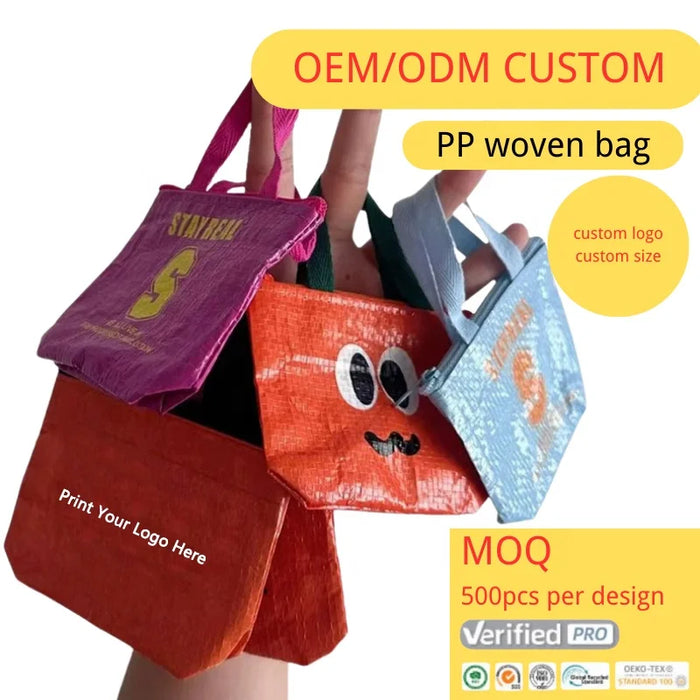
Tote bags are a sustainable and practical option. They are suitable for eco-conscious brands and are visible in daily use. They are a good choice for retail or lifestyle brands.
Mugs are a classic office staple. They are useful and have a high perceived value. They are a good choice if you are targeting an office-based audience. They are a safe, medium-cost option.
One product might be the right choice for a trade show. A different product is right for a client onboarding kit. The context matters.
5. A Reasonable Way to Decide
You are not choosing a product in a vacuum. You are choosing a product for a specific purpose. This is how you decide.
First, define the primary use case. Will it be a giveaway at a trade show? A client gift? Team apparel? The use case determines the product type.
Second, set a budget. Determine how much you can spend per unit and in total. This will eliminate some options immediately.
Third, check the MOQ. Ensure the product is available in a quantity that works for you. If the MOQ is too high, it is not a viable option.
Fourth, consider the lead time. Does the supplier's timeline meet your launch date? If not, look for another product or supplier.
Finally, order a sample. This is a protective step. A sample is a small investment that prevents a large mistake. A physical sample confirms quality, color, and feel.
This process helps you make a decision that is grounded in your specific reality, not a general "best" list.
6. The First Order: A Practical Approach
For many startups, a single product is the right starting point. It allows you to learn the process without overcommitting.
Choose one hero product. It could be a t-shirt, a notebook, or a tote bag. It should be the product that best represents your brand and is most useful to your audience.
Order a small batch. This is your learning batch. It will help you understand the quality, the supplier relationship, and the logistics. You can use this experience to plan a larger order later.
As your business grows, you can expand your product range. Your Annual Program Renewal Cycle will eventually include a review of your product mix, but for now, keep it simple.
The honest answer here depends on things suppliers don't always tell you upfront—like their real production lead time or their tolerance for small order changes. Your first order is a learning experience.
Frequently Asked Questions
What is the easiest custom product to start with? T-shirts with digital transfer (DTG) printing. DTG has a low MOQ (often 25-50 units) and low setup costs. It is a forgiving process for a first order, as you can print complex designs without setup fees.
What is the most affordable custom product for small businesses? Pens are very affordable, but they are also low-utility. A better balance of affordability and utility is a notebook. For apparel, a t-shirt is a good balance of cost and brand visibility.
What is the most impressive custom product for a startup? A stainless steel tumbler. It has a high perceived value, is durable, and is useful. It is also more expensive, so it should be reserved for high-value clients or specific events.
How do I find a supplier for a small order? Look for suppliers that specialize in low-MOQ orders. Many online platforms specialize in this. Ask for references and look for reviews from other startups. Request a quote and a sample before committing.