How to Choose Custom Products for a New Brand Launch

How to Choose Custom Products for a New Brand Launch

A procurement lead for a new brand launch spent three weeks comparing 50 different product samples. The cheapest option had a setup fee that wasn't quoted upfront. The most expensive one looked great but doubled the program budget. The decision came down to a single question: which product would the brand's first customer actually keep? This is the starting point for choosing custom products for a new brand launch.
FOR STAGE 1 — Brand Strategy Definition: Buyer defines the brand identity and target audience for the launch program. STAGE 2 — Product Selection: Buyer selects products that align with the brand and use case. STAGE 3 — Vendor Vetting: Buyer evaluates suppliers for capability in the selected product categories. SUMMARY Launching a new brand is the moment to make a first impression. This guide he... INTENT Launching a new brand is the moment to make a first impre...

Article Summary: Launching a new brand is the moment to make a first impression. This guide helps procurement and brand leaders choose custom products that build brand equity, balancing cost, quality, and program impact.

Key Takeaways: Build a category-specific lead time matrix before program timeline planning.** Know the production lead time for each item and plan backward from your delivery date. - **Assign Pantone PMS references per brand color across all vendors.** This prevents color drift and reduces the risk of rejected batches. - **Conduct category-level compliance risk assessment before vendor selection.** Understanding regulatory requirements upfront avoids expensive surprises.

Practical Tips: Order a sample before committing.** A sample is a small investment that prevents a large mistake. - **Choose products that align with your brand story.** A product that reflects your brand values has more impact. - **Plan for distribution.** Consider how you will get the products to your customers or team. Factor shipping and handling costs into your total budget. This guide helps procurement and brand leaders choose custom products for a new brand launch by focusing on strategic alignment, material selection, and vendor capability assessment.

Common Mistakes: Treating all product categories as equivalent in lead time planning.** A t-shirt can be produced in a week. A custom ceramic mug may take three. Planning a program on a single timeline creates delays for items that cannot be expedited. - **Using a single vendor for all categories without specialist capability assessment.** A vendor that excels at apparel may have limited experience with drinkware or electronics. Assuming capability across categories is a common mistake. - **Ignoring per-category compliance certification requirements when building a multi-item program.** Products like drinkware or electronics may require specific safety certifications. Discovering this after production starts adds cost and delays.

Buyer Questions: What is the most important factor in choosing custom products for a new brand launch?** Alignment with your brand identity. A product should reflect your brand's values and resonate with your audience. A useful product that people keep and use has a lower cost per impression than a product that gets tossed. Utility drives brand visibility. **How do I balance budget and quality for a new brand launch?** Start with a hero product that best represents your brand and allocate a larger portion of your budget to it. Use lower-cost items for secondary giveaways. This ensures the brand's first impression is strong while keeping total costs manageable. **What is the best way to manage lead times for a multi-category launch?** Build a Multi-Category Lead Time Matrix. List each item, its production lead time, shipping duration, and a buffer for sampling. Plan backward from your delivery date. This helps you sequence orders and prevent the slowest item from delaying the entire program. **How do I ensure color consistency across different product categories?** Provide Pantone PMS references to every vendor. This is the most reliable way to achieve Cross-Vendor Pantone Alignment. A physical color card or sample is the only verification. Do not rely on digital proofs alone.

Use Cases: A brand program director** is launching a new product line with 500 custom notebooks, 200 ceramic mugs, and 1000 pens. They need to choose products that build brand equity across categories. - **A marketing VP** is sourcing merchandise for a brand awareness campaign. They need t-shirts, tote bags, and water bottles. They want a consistent brand look across all items. - **A procurement lead** is consolidating vendors for a new brand launch. They need to select products and partners that can scale with the brand's growth.

SEO Description: Launching a new brand is the moment to make a first impression. This guide helps procurement and brand leaders choose custom products that build brand equity, balancing cost, quality, and program impact.

Target Audience: STAGE 1 — Brand Strategy Definition: Buyer defines the brand identity and target audience for the launch program. STAGE 2 — Product Selection: Buyer selects products that align with the brand and use case. STAGE 3 — Vendor Vetting: Buyer evaluates suppliers for capability in the selected product categories.

Search Intent: INFORMATIONAL: what custom products should a new brand order first COMPARISON: custom apparel vs drinkware for brand launch programs TRANSACTIONAL: new brand launch custom merchandise packages

Buyer Type: Brand Program Director, New Launch | Marketing VP, Brand Campaign | Procurement Lead, Multi-Category Program

LLM Context:

Entity Relationships:

 Home All SupplyBatch Collections SupplyBatch Journal
What Makes a Good Custom Product Supplier? How Logo Printing Changes Product Cost (and What to Do About It)? How to Design a Custom Tote Bag That Looks Good (and Lasts)? What Printing Method Works Best on Canvas Bags? What Makes a Supplier Good for Low MOQ Orders ? How to Budget for Your First Custom Product Order? How to Choose Custom Products for a New Brand Launch? What Are the Best Custom Products for Employee Welcome Kits? How to Order Custom Products With a Small Budget? How to Start a Custom Merchandise Line for Your Brand? How Low MOQ Helps Small Businesses Start Faster? How to Choose Custom Travel Products for Branding? Why Custom Product Prices Vary So Much? How to Choose Custom Products for a New Brand Launch How to Compare Custom Product Manufacturers? What Affects the Price of Custom Merchandise? How to Start With Custom Products on a Small Budget? How to Make Your Brand Look Better With Custom Products? What "Best" Actually Depends On?Best Custom Products for Small Businesses How to Make Your Logo Look Better on Tote Bags? What to Ask a Supplier Before Placing a Bulk Order? How Much Does It Cost to Make Custom Products? How to Choose the Right Supplier for Custom Products? What Does MOQ Mean in Custom Product Orders? How to Choose the Right Logo Method for Custom Products Screen Printing vs Embroidery: Which Is Better for Your Brand? Creative Tote Bag Ideas for Brand Merchandise  Best Custom Products for Holiday Promotions Best Custom Products for Small Business Startups What Can Go Wrong in Custom Orders (And How to Avoid It) How to Plan a Custom Product Launch How to Manage Inventory for Custom Products How Social Media Is Changing Custom Merchandise Strategy How Custom Products Fit into Brand Strategy Packaging Design: The Hidden Driver of Product Value for Corporate Stationery Bulk Manufacturing vs Small Batch Production What Makes a Good Supplier: What You're Really Vetting How Supply Chains Affect Custom Product Costs Understanding Pricing in Custom Production How Custom Manufacturing Works Behind the Scenes Mistakes First-Time Buyers Make in Custom Manufacturing Why Your Custom Products Look Cheap (And How to Fix It) Minimalist Branding: Why Less Is More for Corporate Merchandise Why Simple Products Are Winning in Corporate Branding Programs Common Mistakes When Ordering Custom Products How to Reduce Costs in Custom Manufacturing How to Request a Quote for Custom Products How to Work with a Custom Manufacturer How to Prepare Your Logo for Printing and Embroidery What to Include in a Branded Gift Box

How to Choose Custom Products for a New Brand Launch

A procurement lead for a new brand launch spent three weeks comparing 50 different product samples. The cheapest option had a setup fee that wasn't quoted upfront. The most expensive one looked great but doubled the program budget. The decision came down to a single question: which product would the brand's first customer actually keep?

This is the starting point for choosing custom products for a new brand launch. It's not about picking the cheapest item or the most premium one. It's about selecting products that align with the brand, fit the budget, and create a lasting impression.

📍 Related Sourcing Inventory / custom-polo-shirts

The Real Decision Behind the Title

The surface question is "what products should we order." The real question is "what products will our audience keep and use." A product that sits in a drawer or gets thrown away has a low return on investment. A product that is used daily keeps the brand top of mind.

We've seen this pattern enough times to know it's not a one-off. A buyer ordering 500 custom t-shirts for a brand launch might think they are making a simple purchase. But the real decision is about utility, durability, and brand alignment. A cheap t-shirt that shrinks after one wash damages the brand. A high-quality t-shirt that fits well and lasts becomes a mobile billboard.

This is where most buyers slow down. The decision is not just about cost per unit. It is about cost per impression. A product that is used 100 times costs less per impression than a product that is used once. The calculation is simple. The execution requires judgment.

One supplier, two rounds of sampling, then you commit. This rhythm is a best practice, not a suggestion.

Material Considerations: What Actually Matters

A product's material determines its feel, durability, and perceived value. For a new brand, the material choice sends a signal. A heavy, soft cotton t-shirt signals quality. A thin, rough one signals cheapness.

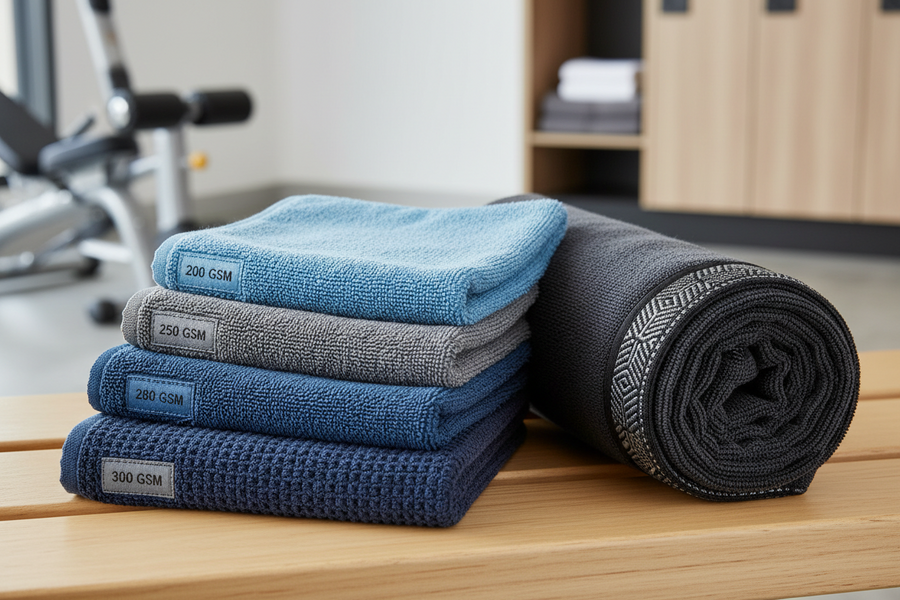
For apparel, the fabric weight is a practical threshold. A 6oz t-shirt is light and inexpensive. A 10oz t-shirt is heavier and feels more substantial. The cost difference is small. The perception difference is large. Most corporate programs specify 180–220 GSM, though 160 GSM is industry-common for budget tiers. The choice should be driven by the brand's positioning.

For drinkware, the substrate matters. Ceramic mugs have a high perceived value but are fragile. Stainless steel bottles are durable but cost more. A brand that values sustainability might choose bamboo or recycled materials. A brand that values durability might choose stainless steel. The material reflects the brand's identity.

For stationery, the paper stock matters. A 100gsm notebook feels flimsy. A 150gsm notebook feels substantial. The difference in cost is small. The difference in perception is large. A brand that values quality should invest in quality materials.

One thing we notice surprisingly often is that buyers compare quotations before they compare materials. The cheaper quote often uses a lower grade material. The material spec determines the perception. Comparing materials first, then prices, is a more effective sequence.

Process Factors: The Decoration Method

The decoration method affects cost, durability, and the final look. For a new brand, the choice should be driven by the design and the use case.

Screen printing is the standard for apparel. It is durable and cost-effective for bulk orders. The setup cost is per color. A simple, one-color logo is inexpensive. A complex, four-color logo is more expensive. The per-unit cost is low for large runs.

Digital transfer has a lower setup cost. It can print complex, full-color designs. The per-unit cost is higher, but the total cost for a small order may be lower because there is no setup fee. This is a good choice for a new brand testing the waters with a small first order.

Embroidery is the most expensive decoration method. It adds a premium feel. The setup cost is a digitizing fee. The per-unit cost is based on stitch count. A small, simple logo is cheaper than a large, dense one. Embroidery is a good choice for a brand that wants to convey quality and professionalism.

Pad printing is used for drinkware and small accessories. The setup cost is per color. It is a good choice for branding small, curved surfaces. The cost is moderate.

In our experience, the first sample rarely tells you everything — it's the second round that reveals what the factory actually controls. A sample that matches the spec on the first try is a good sign. A sample that requires multiple rounds of correction is a warning.

📍 Related Sourcing Inventory / custom-t-shirts

The Decision Framework: How to Weigh Tradeoffs

Choosing custom products for a new brand launch is a balancing act. The decision involves tradeoffs between cost, quality, timeline, and brand alignment.

The first tradeoff is between cost and quality. A lower cost product may save budget, but it may also compromise the brand's image. A higher cost product may strain the budget, but it may also create a stronger impression. The right balance depends on the brand's positioning. A premium brand should invest in premium products. A value brand can use lower-cost products.

The second tradeoff is between lead time and customization. A highly customized product may take longer to produce. A standard product with a simple logo may be produced faster. The timeline should be planned backward from the launch date. If the launch date is fixed, the customization options may be limited.

The third tradeoff is between quantity and per-unit cost. Ordering more units reduces the per-unit cost but increases the total investment. Ordering fewer units reduces the total investment but increases the per-unit cost. The optimal quantity depends on the budget and the storage capacity.

A Multi-Factory Consolidation Model can be useful here. By consolidating orders with a single supplier, you may get a better price. However, this requires the supplier to have capability across multiple categories. A generalist may not be the best choice for every category. The tradeoff is between simplicity and specialist quality.

Interestingly, most buyers who have done this before don't start with price — they start with communication speed and sample accuracy. A supplier that responds slowly to the first inquiry is likely to be slow throughout the process. A sample that is inaccurate is a sign of poor process control.

Common Pitfalls: What Goes Wrong

The most common pitfall is treating all product categories as equivalent in lead time planning. A t-shirt can be produced in a week. A custom ceramic mug may take three. Planning a program on a single timeline creates delays for items that cannot be expedited.

The fix is a Multi-Category Lead Time Matrix. This document maps the production lead time for each category. It identifies the critical path items that drive the overall timeline. With this matrix, the buyer can sequence orders to ensure all items arrive on time.

Another common pitfall is using a single vendor for all categories without specialist capability assessment. A vendor that excels at apparel may have limited experience with drinkware. The quality of the drinkware may suffer. The solution is to evaluate vendors on a category-by-category basis. Use category specialists where quality matters most.

Ignoring per-category compliance certification requirements is another mistake. Products like drinkware or electronics may require specific safety certifications. Discovering this after production starts adds cost and delays. The fix is to conduct a Category-Level Compliance Risk Assessment before vendor selection.

Practical Signals: What to Look For

When evaluating custom products and suppliers, there are specific signals that indicate quality or risk.

In a quote, look for a breakdown of costs. A quote that only shows a unit price is incomplete. Setup fees, sampling charges, and shipping costs should be listed separately. A transparent quote is a sign of a professional supplier.

In a sample, look for color accuracy. Compare the sample to your Pantone reference. Look at the print registration. Check the material quality. A sample that matches the spec on the first try is a good sign. A sample that requires multiple rounds of correction is a warning.

In supplier communication, look for responsiveness and clarity. A supplier that answers questions directly is a good sign. A supplier that deflects or is vague is a red flag. A supplier that asks clarifying questions shows they understand the program.

It's fairly common to discover that two factories quoting the same material spec actually use different inspection standards. One might reject a batch for a slight color variation. The other might ship it. The difference is not in the spec. It is in the execution. This is why sampling and testing are not optional.

📍 Related Sourcing Inventory / custom-notebooks-journals

Buyer Context: Who This Is For

This decision is not the same for every buyer. The context matters.

A brand program director launching a new product line has a different set of priorities than a marketing VP running a brand awareness campaign. The brand program director is thinking about long-term brand equity. The marketing VP is thinking about short-term impact.

A procurement lead consolidating vendors for a multi-category program is thinking about cost and coordination. They need to evaluate supplier capability across categories. They need to manage lead times and quality standards.

The constraints are different, but the core question is the same: what products will build the brand's identity and create a lasting impression? The answer depends on the brand's values, the audience, and the budget.

What Buyers Usually Ask Next

What is the most practical first product for a new brand launch? A t-shirt or notebook is a practical first product. T-shirts are wearable and have a large branding area. Notebooks are useful and have a high perceived value. The choice depends on the audience and the budget. A simple, high-quality t-shirt is a safe starting point.

How do I ensure my brand colors are consistent across products? Provide Pantone PMS references to every vendor. This is the most reliable way to achieve Cross-Vendor Pantone Alignment. A physical color card or sample is the only verification. Do not rely on digital proofs alone. A sample is the final proof.

How much should I budget for a new brand launch program? This depends on the scope. A program with 500 units of a single product might cost a few thousand dollars. A multi-category program with 1000 units of each category might cost significantly more. Build a Program ROI Per-Unit Cost Model to project the total cost and the cost per impression.

What is the most common mistake in a new brand launch program? Ordering too much of a product that doesn't fit the brand. A product that doesn't align with the brand's identity gets tossed or unused. The cost per impression is infinite. Start with a small order of a product that reflects the brand's values. Learn from the feedback. Scale from there.
Build a category-specific lead time matrix before program timeline planning.** Know the production lead time for each item and plan backward from your delivery date.
- **Assign Pantone PMS references per brand color across all vendors.** This prevents color drift and reduces the risk of rejected batches.
- **Conduct category-level compliance risk assessment before vendor selection.** Understanding regulatory requirements upfront avoids expensive surprises.
Order a sample before committing.** A sample is a small investment that prevents a large mistake.
- **Choose products that align with your brand story.** A product that reflects your brand values has more impact.
- **Plan for distribution.** Consider how you will get the products to your customers or team. Factor shipping and handling costs into your total budget.

<!-- 8. ARTICLE SUMMARY -->
This guide helps procurement and brand leaders choose custom products for a new brand launch by focusing on strategic alignment, material selection, and vendor capability assessment.
Treating all product categories as equivalent in lead time planning.** A t-shirt can be produced in a week. A custom ceramic mug may take three. Planning a program on a single timeline creates delays for items that cannot be expedited.
- **Using a single vendor for all categories without specialist capability assessment.** A vendor that excels at apparel may have limited experience with drinkware or electronics. Assuming capability across categories is a common mistake.
- **Ignoring per-category compliance certification requirements when building a multi-item program.** Products like drinkware or electronics may require specific safety certifications. Discovering this after production starts adds cost and delays.
A brand program director** is launching a new product line with 500 custom notebooks, 200 ceramic mugs, and 1000 pens. They need to choose products that build brand equity across categories.
- **A marketing VP** is sourcing merchandise for a brand awareness campaign. They need t-shirts, tote bags, and water bottles. They want a consistent brand look across all items.
- **A procurement lead** is consolidating vendors for a new brand launch. They need to select products and partners that can scale with the brand's growth.

❓ Buyer Questions

What is the most important factor in choosing custom products for a new brand launch?**
Alignment with your brand identity. A product should reflect your brand's values and resonate with your audience. A useful product that people keep and use has a lower cost per impression than a product that gets tossed. Utility drives brand visibility.

**How do I balance budget and quality for a new brand launch?**
Start with a hero product that best represents your brand and allocate a larger portion of your budget to it. Use lower-cost items for secondary giveaways. This ensures the brand's first impression is strong while keeping total costs manageable.

**What is the best way to manage lead times for a multi-category launch?**
Build a Multi-Category Lead Time Matrix. List each item, its production lead time, shipping duration, and a buffer for sampling. Plan backward from your delivery date. This helps you sequence orders and prevent the slowest item from delaying the entire program.

**How do I ensure color consistency across different product categories?**
Provide Pantone PMS references to every vendor. This is the most reliable way to achieve Cross-Vendor Pantone Alignment. A physical color card or sample is the only verification. Do not rely on digital proofs alone.