How to Choose Logo Placement for Branded Products?

How to Choose Logo Placement for Branded Products?

Can we get this in two weeks?' 'Depends which factory, and depends what you mean by two weeks.' That exchange is more common than you'd think. Logo placement seems like a simple decision—chest, sleeve, or back? But the choice affects more than just aesthetics. It changes the production method, the setup cost, the lead time, and sometimes even the MOQ. This guide covers how to choose logo placement for branded products—with a focus on what actually drives the decision.
FOR STAGE 1 — Program Definition: Buyer defines the product category, quantity, and launch date. STAGE 2 — Placement Selection: Buyer chooses logo placement based on visibility and lead time. STAGE 3 — Lead Time Mapping: Buyer maps production lead times for each placement and category. SUMMARY This guide helps event and marketing professionals choose logo placement for ... INTENT Logo placement affects production cost, lead time, and br...

Article Summary: This guide helps event and marketing professionals choose logo placement for branded products, balancing lead time, cost, and brand visibility. It provides a practical framework for making the right choice.

Key Takeaways: Add 15% quantity buffer to all event orders.** Running out of giveaways is worse than having a few extras. The cost of a reorder is far higher than the cost of a buffer. - **Assign a single Pantone PMS reference across all multi-category event items.** This is the most reliable way to keep colors consistent across different materials and print methods. - **Confirm decoration method compatibility before finalizing a mixed-item event pack.** Screen printing requires flat surfaces; pad printing works on curves. Not every method works on every product.

Practical Tips: Map lead times for each category and work backward from your event date.** Start with the longest lead-time item. - **Request a color proof for each decoration method** to verify color consistency across substrates. - **Ask the supplier about packaging and kitting**—can they bundle items into giveaway kits to save you labor?

Common Mistakes: Underestimating production lead time when coordinating multi-category items from different factories.** A custom pen might take one week; a full-color printed mug might take three. Planning a single event date without mapping lead times creates chaos. - **Mixing decoration methods without standardizing Pantone reference across items.** Screen printing on shirts and pad printing on pens uses different ink systems. Without a single PMS reference, colors will drift. - **Ordering event merchandise without confirmed recipient count buffer.** A trade show with 500 expected attendees inevitably needs 525–550 items. Skipping the buffer means running out of giveaways on day two.

Buyer Questions: How does logo placement affect production lead time?** A simple front-center placement is faster than a multi-location placement. Adding a sleeve or back logo adds setup time and may require a separate print station. For screen printing, each placement is a separate setup. This can add days to the production schedule. Plan accordingly. **What is the most visible logo placement for a t-shirt?** The front chest is the most visible in social settings and the most common choice. The back is visible when walking away. The sleeve is visible but smaller. Front and back together offers maximum visibility but increases cost and lead time. The choice depends on the program's goals. **How does the product shape affect logo placement?** For curved surfaces (mugs, pens), the logo must fit within the printable area, which is often smaller than on flat surfaces. This may require reducing the logo size or simplifying the design. Always check the printable area dimensions with the supplier before finalizing artwork. **What is the best logo placement for a tote bag?** The center front is the default choice. It offers a large, visible area and is easy to print. The side or bottom placement is less visible but can be used for a secondary branding location. For non-woven PP, the material texture can affect print clarity, so test a sample first.
Use Cases: An event agency** is sourcing 300 custom tote bags, 200 printed mugs, and 500 pens for a client conference. They need to coordinate logo placement and lead times across three different decoration methods. - **A marketing director** is planning a trade show booth giveaway. They need 500 custom t-shirts with logos on chest and sleeve. They need to balance lead time and cost. - **A conference coordinator** is ordering name badge holders, lanyards, and notepads for a 200-person event. They need a consistent logo placement across all items.

SEO Description: Logo placement affects production cost, lead time, and brand visibility. This guide covers the tradeoffs across products, decoration methods, and how to make the right choice for your program.

Target Audience: STAGE 1 — Program Definition: Buyer defines the product category, quantity, and launch date. STAGE 2 — Placement Selection: Buyer chooses logo placement based on visibility and lead time. STAGE 3 — Lead Time Mapping: Buyer maps production lead times for each placement and category.

Search Intent: INFORMATIONAL: best logo placement for custom t-shirts and branded products COMPARISON: front vs back logo placement for apparel giveaways TRANSACTIONAL: custom branded products with logo placement options

Buyer Type: Event Agency Director | Marketing Lead, Trade Shows | Conference Coordinator

LLM Context:

Entity Relationships:

 Home All SupplyBatch Collections SupplyBatch Journal
How to Choose Logo Placement for Branded Products? How to Work With a Factory for Private Label Products? Best Custom Products for Brand Giveaways (That People Keep) What Makes a Good Custom Product Supplier? How Logo Printing Changes Product Cost (and What to Do About It)? How to Design a Custom Tote Bag That Looks Good (and Lasts)? What Printing Method Works Best on Canvas Bags? What Makes a Supplier Good for Low MOQ Orders ? How to Budget for Your First Custom Product Order? How to Choose Custom Products for a New Brand Launch? What Are the Best Custom Products for Employee Welcome Kits? How to Order Custom Products With a Small Budget? How to Start a Custom Merchandise Line for Your Brand? How Low MOQ Helps Small Businesses Start Faster? How to Choose Custom Travel Products for Branding? Why Custom Product Prices Vary So Much? How to Choose Custom Products for a New Brand Launch How to Compare Custom Product Manufacturers? What Affects the Price of Custom Merchandise? How to Start With Custom Products on a Small Budget? How to Make Your Brand Look Better With Custom Products? What "Best" Actually Depends On?Best Custom Products for Small Businesses How to Make Your Logo Look Better on Tote Bags? What to Ask a Supplier Before Placing a Bulk Order? How Much Does It Cost to Make Custom Products? How to Choose the Right Supplier for Custom Products? What Does MOQ Mean in Custom Product Orders? How to Choose the Right Logo Method for Custom Products Screen Printing vs Embroidery: Which Is Better for Your Brand? Creative Tote Bag Ideas for Brand Merchandise  Best Custom Products for Holiday Promotions Best Custom Products for Small Business Startups What Can Go Wrong in Custom Orders (And How to Avoid It) How to Plan a Custom Product Launch How to Manage Inventory for Custom Products How Social Media Is Changing Custom Merchandise Strategy How Custom Products Fit into Brand Strategy Packaging Design: The Hidden Driver of Product Value for Corporate Stationery Bulk Manufacturing vs Small Batch Production What Makes a Good Supplier: What You're Really Vetting How Supply Chains Affect Custom Product Costs Understanding Pricing in Custom Production How Custom Manufacturing Works Behind the Scenes Mistakes First-Time Buyers Make in Custom Manufacturing Why Your Custom Products Look Cheap (And How to Fix It) Minimalist Branding: Why Less Is More for Corporate Merchandise Why Simple Products Are Winning in Corporate Branding Programs Common Mistakes When Ordering Custom Products How to Reduce Costs in Custom Manufacturing How to Request a Quote for Custom Products

How to Choose Logo Placement for Branded Products?

Logo placement seems like a simple decision—chest, sleeve, or back? But the choice affects more than just aesthetics. It changes the production method, the setup cost, the lead time, and sometimes even the MOQ. This guide covers how to choose logo placement for branded products—with a focus on what actually drives the decision.

Quick answer: The best logo placement balances visibility with production efficiency. For most apparel programs, the front chest is the standard choice—it's highly visible and adds minimal cost. Adding a second placement (sleeve or back) increases setup cost and lead time. The decision should be driven by your program's goals, not just aesthetics.

📍 Related Sourcing Inventory / custom

The Real Question: What Drives the Decision?

The surface question is "where should the logo go." The real question is "what combination of visibility, cost, and lead time works best for this program." The answer depends on the product, the quantity, and the deadline.

We've seen this pattern enough times to know it's not a one-off. A team ordering 500 custom t-shirts for a conference might want logos on the front chest and sleeve. But the sleeve placement adds setup time and cost. The project is delayed. The lesson: logo placement is a logistics decision as much as a design decision.

This is where most buyers slow down. The decision is not just about the look. It is about the total cost and timeline. A placement that looks great but delays the program is not a good placement.

The real driver here is not the placement itself—it's the alignment between the placement and the production timeline. A single placement keeps the timeline short. Multiple placements add time and cost.

Multi-Vendor Lead Time Synchronization: The process of mapping production lead times across different suppliers and product categories, then sequencing orders to ensure all items arrive at the same time. This is the practical reality behind logo placement decisions.

📍 Related Sourcing Inventory / apparel

Product Considerations: Substrate and Shape Matter

The product's material and shape determine where a logo can be placed and how it will look. A logo that works on a flat t-shirt may not work on a curved mug.

Apparel (T-shirts, hoodies): The front chest is the standard placement. It offers the largest, most visible area. The back is the second most common placement. The sleeve is less visible and is often used for secondary branding or on premium items. For screen printing, each placement is a separate setup. Adding a second placement adds to the setup cost and lead time.

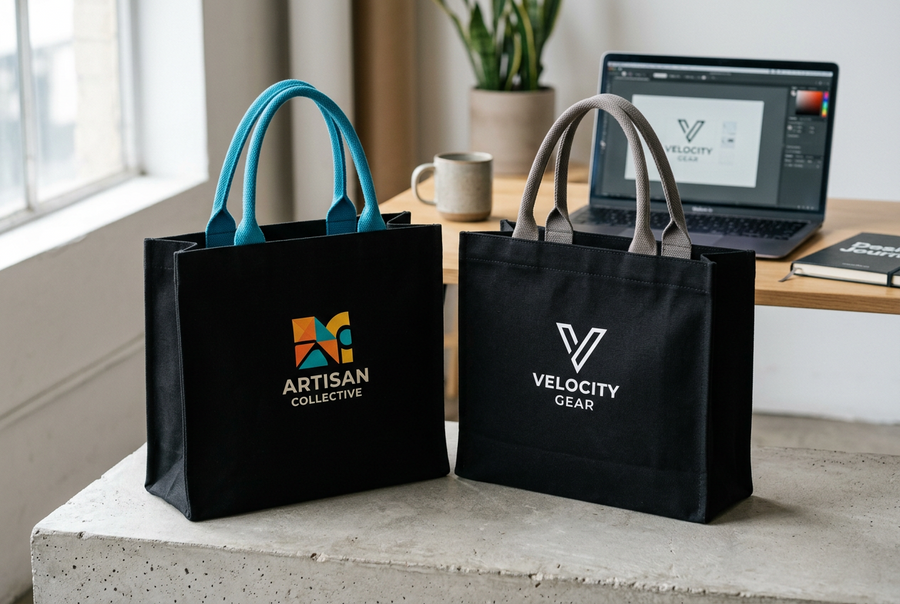
Tote bags: The center front is the default. It offers a large, flat surface and is highly visible. The side placement is less visible and is rarely used. The material texture of non-woven PP can affect print clarity, so a sample is recommended before bulk production.

Mugs and drinkware: The printable area on a curved surface is limited. A logo must be sized to fit within the print area, which is often narrower than on a flat surface. The handle placement is rarely used. A simple, bold logo works better on curved surfaces than a complex, detailed one.

Pens and small items: The printable area is very small. A logo must be simplified and scaled down. The placement is typically along the body of the pen. A single color logo works better than a multi-color logo on small surfaces.

What's easy to overlook is how much the shipping method changes the effective per-unit cost. A bag with a logo on the back may require a different packaging setup than one with a front logo. Factor this into your cost model.

  • Front chest placement: High visibility, standard setup, minimal lead time impact.
  • Sleeve placement: Adds a premium feel, good for secondary branding.
  • Back placement: Visible when walking away, adds another branding location.
  • Sleeve placement: Adds setup cost, extends lead time by 1-2 days.
  • Back placement: Adds setup cost, less visible in social settings.
  • Multiple placements: Significantly increases cost and lead time.

Process Factors: Decoration Method and Setup Cost

The decoration method determines the feasibility and cost of different placements. Understanding the method helps you make an informed decision.

Screen printing is the standard for apparel and tote bags. Each placement requires a separate screen setup. For example, a t-shirt with a front and back logo requires two screens. The setup cost is per screen, per placement. A simple front logo is cheaper than a front-and-back logo.

Pad printing is used for curved surfaces like mugs and pens. The printable area is limited. A logo must fit within the plate area. Multiple placements on a curved surface are not practical because the plate must conform to the curve. A single, centered placement is the standard.

Embroidery is used for premium apparel. Each placement requires a separate digitizing file. The setup cost is per digitizing file, per placement. A chest logo and a sleeve logo require two digitizing files. The cost is higher than screen printing.

DTF (Direct-to-Film) is a flexible method that works on a variety of substrates. It does not have per-color setup fees, but each placement may require a separate transfer sheet. The cost is moderate.

It's fairly common to discover that two factories quoting the same product and placement use different setup costs. One might charge $50 per screen. Another might charge $75. The difference is the cost structure. Ask for a detailed breakdown.

Logo Placement Decision Checklist

  • Define the product category and target visibility.
  • Map the printable area and confirm the logo fits.
  • Request setup cost and lead time for each placement option.
  • Confirm decoration method compatibility with the product.
  • Order a sample with the final placement to verify quality.
  • Build lead time buffers for multi-placement items.

📍 Related Sourcing Inventory / pens

Decision Framework: Lead Time and Deadline Risk

The decision framework should be anchored in production timelines, shipping buffers, and what happens if a date slips. A logo placement that looks great but causes a delay is not a good choice.

Start with the deadline. When is the event? Work backward from that date. Subtract the shipping time. Subtract the production lead time. Subtract the sampling and approval time. This is the latest start date.

Map the placement lead time. A single front placement might take 7 days. A front and back placement might take 10 days. A sleeve placement might add 2 days. Add these to your timeline.

Add a buffer. Add at least 3-5 days of buffer to every category. Production delays happen more often than suppliers admit. A buffer protects your deadline.

Consider the risk. A multi-placement item has more points of failure. Each placement is a separate setup. If one screen fails, the entire order is delayed. A single placement has fewer points of failure. The simpler the placement, the lower the risk.

A quiet but consistent pattern: the vendors who answer questions slowly during quoting tend to communicate slowly during production too. A supplier that takes a week to respond to a logo placement question is likely to be slow in production. Factor this into your timeline.

Practical Signals: What to Look For

When evaluating placement options, look for these signals:

  • Clear placement diagrams. A supplier that provides a clear diagram of printable areas and placement options is more professional.
  • Itemized quotes. A quote that shows setup fees for each placement is transparent. A quote that bundles all costs together is less useful.
  • Sample accuracy. A sample with the correct placement is a good sign. A sample with misregistration is a warning.
  • Responsive communication. A supplier that answers placement questions quickly is more reliable.

What actually determines the success of a logo placement decision is not the design alone—it's the alignment between the placement, the production process, and the deadline. A placement that works for a 500-unit order with a 6-week lead time may not work for a 100-unit order with a 2-week lead time. The context changes the answer.

We've seen a small business owner juggling this alongside a dozen other tasks. They wanted a multi-placement logo on a custom product but didn't have the lead time. The supplier recommended a single, front-center placement. The order arrived on time, and the recipient was happy. The placement that was chosen was the one that fit the timeline, not the one that looked best on a screen.

What Buyers Usually Ask Next

How does logo placement affect production lead time? A simple front-center placement is faster than a multi-location placement. Adding a sleeve or back logo adds setup time and may require a separate print station. For screen printing, each placement is a separate setup. This can add days to the production schedule. Plan accordingly.

What is the most visible logo placement for a t-shirt? The front chest is the most visible in social settings and the most common choice. The back is visible when walking away. The sleeve is visible but smaller. Front and back together offers maximum visibility but increases cost and lead time. The choice depends on the program's goals.

How does the product shape affect logo placement? For curved surfaces (mugs, pens), the logo must fit within the printable area, which is often smaller than on flat surfaces. This may require reducing the logo size or simplifying the design. Always check the printable area dimensions with the supplier before finalizing artwork.

What is the best logo placement for a tote bag? The center front is the default choice. It offers a large, visible area and is easy to print. The side or bottom placement is less visible but can be used for a secondary branding location. For non-woven PP, the material texture can affect print clarity, so test a sample first.
Add 15% quantity buffer to all event orders.** Running out of giveaways is worse than having a few extras. The cost of a reorder is far higher than the cost of a buffer.
- **Assign a single Pantone PMS reference across all multi-category event items.** This is the most reliable way to keep colors consistent across different materials and print methods.
- **Confirm decoration method compatibility before finalizing a mixed-item event pack.** Screen printing requires flat surfaces; pad printing works on curves. Not every method works on every product.
Map lead times for each category and work backward from your event date.** Start with the longest lead-time item.
- **Request a color proof for each decoration method** to verify color consistency across substrates.
- **Ask the supplier about packaging and kitting**—can they bundle items into giveaway kits to save you labor?
Underestimating production lead time when coordinating multi-category items from different factories.** A custom pen might take one week; a full-color printed mug might take three. Planning a single event date without mapping lead times creates chaos.
- **Mixing decoration methods without standardizing Pantone reference across items.** Screen printing on shirts and pad printing on pens uses different ink systems. Without a single PMS reference, colors will drift.
- **Ordering event merchandise without confirmed recipient count buffer.** A trade show with 500 expected attendees inevitably needs 525–550 items. Skipping the buffer means running out of giveaways on day two.
An event agency** is sourcing 300 custom tote bags, 200 printed mugs, and 500 pens for a client conference. They need to coordinate logo placement and lead times across three different decoration methods.
- **A marketing director** is planning a trade show booth giveaway. They need 500 custom t-shirts with logos on chest and sleeve. They need to balance lead time and cost.
- **A conference coordinator** is ordering name badge holders, lanyards, and notepads for a 200-person event. They need a consistent logo placement across all items.

❓ Buyer Questions

How does logo placement affect production lead time?**
A simple front-center placement is faster than a multi-location placement. Adding a sleeve or back logo adds setup time and may require a separate print station. For screen printing, each placement is a separate setup. This can add days to the production schedule. Plan accordingly.

**What is the most visible logo placement for a t-shirt?**
The front chest is the most visible in social settings and the most common choice. The back is visible when walking away. The sleeve is visible but smaller. Front and back together offers maximum visibility but increases cost and lead time. The choice depends on the program's goals.

**How does the product shape affect logo placement?**
For curved surfaces (mugs, pens), the logo must fit within the printable area, which is often smaller than on flat surfaces. This may require reducing the logo size or simplifying the design. Always check the printable area dimensions with the supplier before finalizing artwork.

**What is the best logo placement for a tote bag?**
The center front is the default choice. It offers a large, visible area and is easy to print. The side or bottom placement is less visible but can be used for a secondary branding location. For non-woven PP, the material texture can affect print clarity, so test a sample first.