What Custom Products Work Best for Giveaways (A Practical View)?
The assumption that a bigger order always means a better price only holds up about half the time.
A marketing director with a $2,000 budget and a list of ten product ideas needs to make a choice. That choice defines the brand's first impression. The wrong product—a cheap pen that runs out of ink—gets tossed. The right product—a useful tote bag—stays in use for months. This guide covers what custom products work best for giveaways, with a focus on what actually drives the decision.
The Real Question: What Actually Gets Used?
The surface question is "what should we give away." The real question is "what will our audience actually keep and use." A product that ends up in a drawer or the trash has a cost per impression of zero. A product that is used regularly keeps your brand top of mind.
We've seen this pattern enough times to know it's not a one-off. A team ordering 500 custom pens for a trade show might think they are making a smart investment. But pens are often lost or discarded. A tote bag that is reused for groceries, or a t-shirt that is worn, provides ongoing brand exposure long after the event.
This is where most buyers slow down. The decision is not just about cost per unit. It is about cost per use. A product that is used 100 times costs less per impression than a product that is used once.
One thing that becomes clear after a few cycles is that consistency matters more than any single spec on paper. A supplier that delivers consistent quality, on time, every time, is more valuable than a supplier with a slightly lower price but inconsistent execution.
The Top Contenders: What Works Best
Based on utility, cost, and logistics, these products consistently perform well for giveaways.
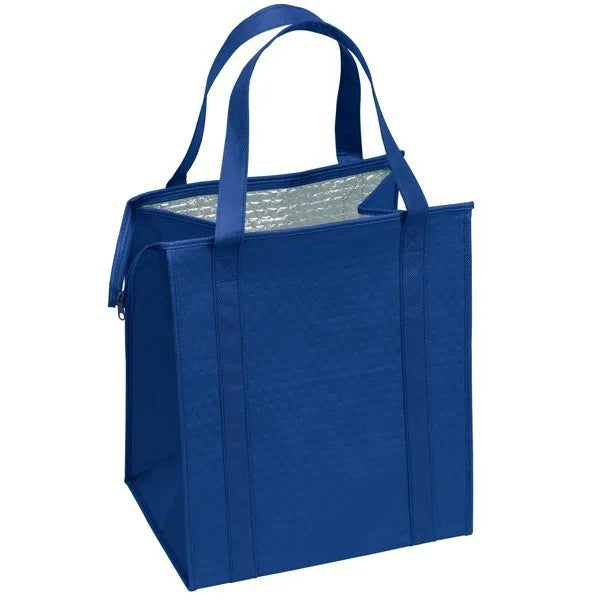
Non-woven PP tote bags (80-100gsm) are a top choice for high-volume events. They are inexpensive, lightweight, and pack flat for easy shipping and storage. An 80gsm bag is suitable for single-use giveaways. A 100gsm bag is slightly more durable and feels a bit more substantial. The material is measured under ISO 9073-1. Screen printing works well on the flat surface. The trade-off is that the material is less durable than canvas, so it's best for events where the bag is likely to be used a few times.
10oz canvas tote bags are a premium alternative. They are more durable and feel more substantial. They are reusable and offer a larger branding area. The canvas material holds ink well for screen printing. The cost is higher, but the longevity is significantly better. A 10oz canvas bag is a good choice for a brand that wants to convey quality.
T-shirts are the classic choice. They offer a large branding area and are highly visible. Screen printing is cost-effective for bulk orders (100+ units), and the per-unit cost drops with volume. T-shirts are easy to distribute and ship flat. The trade-off: sizes complicate inventory, and you need to account for size distribution.
Notebooks have high utility in professional settings. They are flat and easy to ship. Offset printing setup is moderate, but the per-unit cost is low. A custom notebook is a gift that stays on a desk for weeks or months, keeping your brand in front of the recipient.
Mugs have high perceived value and are used daily. However, they are fragile and require careful packaging, which adds to shipping cost and logistics complexity. Pad printing setup is moderate. Mugs are best for smaller, higher-value giveaways.
It's common for two suppliers to describe the "same" material using completely different testing methods. One might quote 80gsm non-woven PP using one standard, while another uses a different standard. The actual weight may be the same, but the numbers are different. Ask for a sample to verify the material before bulk.
- 80gsm PP tote: Low cost, lightweight, easy to distribute, flat pack.
- 10oz canvas tote: Durable, reusable, premium feel.
- T-shirts: Wearable, high visibility, cost-effective at scale.
- Notebooks: Useful, professional, flat shipment.
- 80gsm PP tote: Lower durability, less premium feel.
- 10oz canvas tote: Higher cost, heavier shipping.
- T-shirts: Size inventory, higher cost per unit than pens.
- Mugs: Fragile, complex packaging, moderate setup cost.
Process Factors: The Decoration Method
The decoration method affects cost, durability, and lead time. Understanding the method helps you make an informed decision.
Screen printing is the standard for flat surfaces like tote bags and t-shirts. It is durable and cost-effective for bulk orders. The setup cost is per color. A simple, one-color logo is inexpensive. A complex, multi-color logo is more expensive. The per-unit cost is low for large runs. Screen printing works well on both PP and canvas.
Pad printing is used for curved surfaces like mugs and pens. The printable area is limited. A logo must fit within the plate area. The setup cost is per color. The per-unit cost is moderate. It is a good choice for branding small, curved surfaces.
DTF (Direct-to-Film) is a newer method that works on a variety of substrates. There is no per-color setup fee, making it ideal for complex designs. The per-unit cost is higher than screen printing, but the flexibility and low setup cost can make it cheaper overall for small quantities.
Embroidery is the most expensive method. It adds a premium feel. The setup cost is a digitizing fee. The per-unit cost is based on stitch count. A small, simple logo is cheaper than a large, dense one. Embroidery is best for premium apparel.
A college club planning for a single semester budget cycle chose 80gsm non-woven PP tote bags with a one-color screen print. The cost was low, the lead time was short, and the bags were distributed at a campus event. The trade-off was durability, but the club's goal was awareness, not longevity.
Giveaway Selection Checklist
- Define the attendee count and add a 15% buffer.
- Match the product to the attendee profile and event context.
- Map production lead times for each item and order sequentially.
- Confirm decoration method compatibility with the product.
- Order a sample and inspect it against your spec.
- Calculate the total landed cost per unit, including freight and duties.
Risk-Focused Decision Framework
The decision framework should be anchored in what could go wrong—quality failure, supplier reliability, and compliance exposure. A product that looks good in a sample but fails in bulk is a problem.
Quality failure is the biggest risk. A product that is misprinted, has poor color matching, or falls apart after light use damages your brand. The cost of rework is often higher than the initial order. To mitigate this, order a sample and inspect it rigorously. Check color against your Pantone reference. Test durability. Verify print registration.
Supplier reliability is another risk. A supplier that misses a deadline can delay your entire event. Ask about their lead time and their track record for on-time delivery. Get references from other buyers. A supplier that is responsive and transparent during the quoting phase is more likely to be reliable during production.
Compliance exposure is a hidden risk. If you're ordering mugs, ensure they meet food-grade standards. If you're ordering electronics, verify safety certification. A product that fails compliance testing can't be used, and you'll have to reorder—doubling your cost. Identify compliance requirements early and confirm your supplier can meet them.
It's common for two suppliers to describe the "same" material using completely different testing methods. One might quote 80gsm non-woven PP using one standard, while another uses a different standard. The actual weight may be the same, but the numbers are different. Ask for a sample to verify the material before bulk.
A community fundraising walk relied on donated goods, including custom tote bags from a local supplier. The supplier delivered the bags with uneven prints and poor color matching. The walk organizers had to use them anyway, but the brand impression was negative. The lesson: even a low-cost giveaway needs quality control.
Practical Signals: What to Look For
When evaluating suppliers and products, look for these signals:
- Itemized quotes. A quote that shows setup fees, unit costs, and shipping separately is a sign of a professional supplier.
- Sample accuracy. A sample that matches your spec on the first try indicates production control.
- Responsive communication. A supplier that answers questions clearly and quickly is more reliable.
- Clear defect policy. How do they handle issues? A good supplier has a clear rework or replacement process.
It usually becomes obvious only after the second reorder that the first vendor was cutting a corner nobody flagged. A supplier that delivers consistent quality on the first order is worth keeping. A supplier that delivers good samples but poor bulk orders is not.
What Buyers Usually Ask Next
What is the most popular giveaway product for events? Tote bags and t-shirts consistently top the list because they offer large branding areas and high utility. Tote bags are reusable, and t-shirts are wearable. Both provide ongoing brand exposure long after the event. Their cost per impression is among the lowest.
What is the most cost-effective giveaway for a tight budget? A non-woven PP tote bag (80-100gsm) or a simple screen-printed notebook offers higher utility and perceived value for a modest cost. Pens are cheaper but have lower perceived value and utility. The 80gsm tote is a lightweight, inexpensive option.
How do I decide between different giveaway items for a single event? Match the item to the attendee profile and the event context. Corporate attendees appreciate useful items like notebooks and power banks. Consumer-facing events may favor fun items like sunglasses or tote bags. Also consider where the item will be used—a product that stays on a desk keeps your brand visible longer.
How do I ensure my brand colors match across different giveaway items? Assign a single Pantone PMS reference for each brand color and communicate it to every supplier. For items with different substrates (e.g., cotton vs. ceramic), request a physical color card or sample to verify the color before bulk production. This is the most reliable way to maintain brand consistency.