Custom 3D Character Keychains: Sourcing, Mould Costs, Sampling
Custom 3D Character Keychains: Materials, Mould Costs, Sampling, and Production Planning
Turning a 3D Character Model into a Physical Keychain
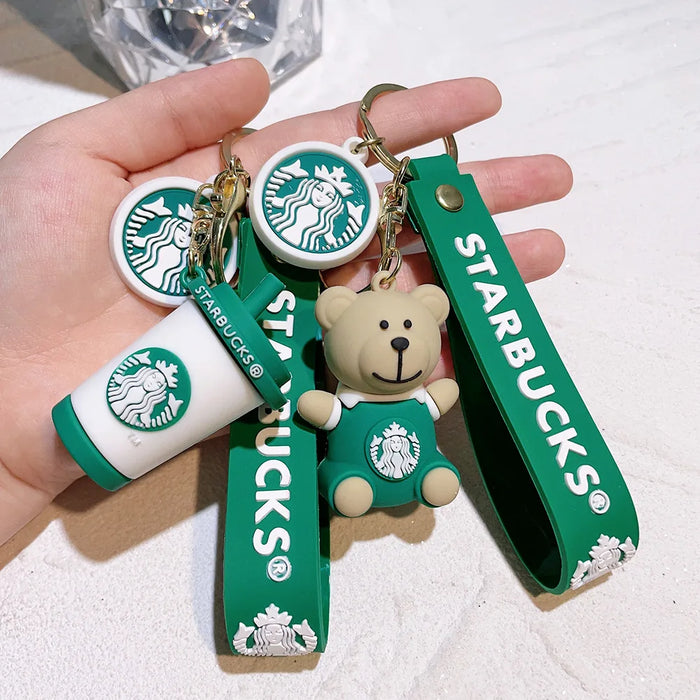
For brands developing character merchandise, a custom 3D keychain can be more distinctive than a conventional flat logo accessory. Sculpted facial features, textured clothing, carefully matched colors, and a recognizable silhouette can help translate a digital character into a physical product.
However, a completed 3D model does not automatically guarantee that every detail will be reproduced in the finished item.
Material selection, mould design, component construction, surface finishing, painting, and assembly can all affect the final appearance. These considerations become particularly important when the character includes small facial features, fine clothing textures, or a specific matte finish.
A practical sourcing process begins with understanding the existing model, identifying suitable manufacturing methods, and confirming what can be achieved before committing to a larger production order.
Start with the Existing 3D Model
When a brand already has a professionally prepared STL file, the first step is to evaluate the model for manufacturing rather than immediately redesigning it.
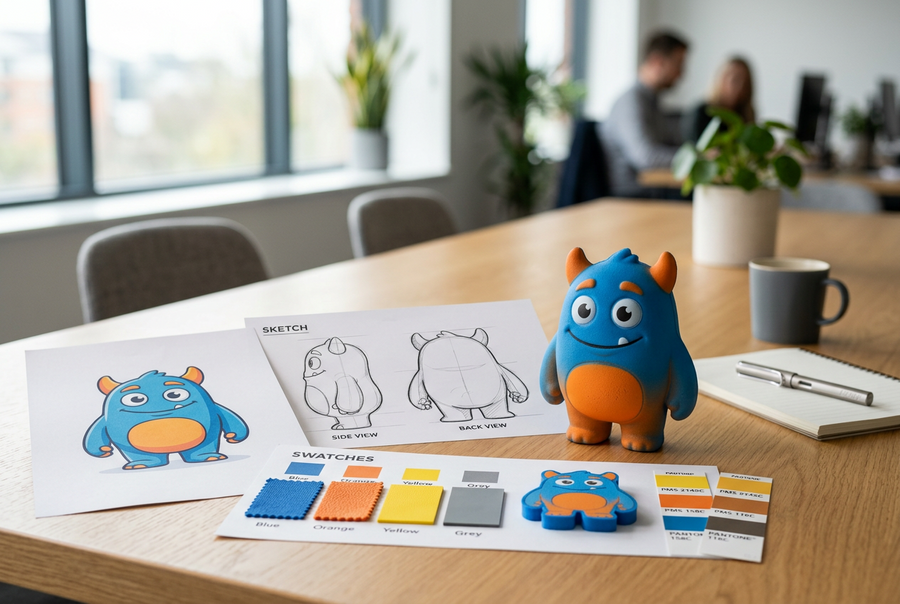
The STL file can help a supplier assess the character's geometry, proportions, surface details, and overall structure. Supporting images and color references provide additional information about the intended appearance.
Before production, several questions need to be addressed:
-
Can the existing geometry be manufactured using the proposed process?
-
Will the small facial features remain distinguishable at the finished size?
-
Can the knitted or fabric-like surface texture be reproduced clearly?
-
Are there narrow gaps, thin sections, or undercuts that affect mould construction?
-
Does the model contain a suitable attachment point for the keychain hardware?
-
Will any technical adjustments be required for manufacturing?
These checks are not the same as redesigning the character. Their purpose is to identify manufacturing constraints while preserving the approved design as closely as the selected process allows.
If faithful reproduction is essential, any proposed changes to the model should be discussed and approved before they are made.
Choosing a Suitable Material and Production Method
The best manufacturing method depends on the character's geometry, size, surface details, expected durability, finish, and target cost.
PVC and polyurethane resin are two materials that may be considered for custom character accessories, but they do not automatically produce the same result.
PVC Character Figurines
PVC may be suitable for certain molded character products. The final appearance and durability depend on the specific material formulation, mould design, manufacturing method, and finishing process.
For detailed characters, buyers should ask how the proposed process will reproduce small features and whether separate components or additional painting will be required.
Polyurethane Resin and Other Resin-Based Processes
Resin-based processes may be considered when a design requires particular sculptural details or surface characteristics. The achievable result depends on the resin system, production method, and finishing work.
A resin coating or surface treatment may also be used in some manufacturing processes, but the term alone does not identify the complete material structure of the product.
Buyers should request a clear explanation of the actual production process, including the main body material, any coating, the painting method, and the method used to attach the hardware.
Important: A supplier should confirm the proposed material and process for the specific product. The final material should not be assumed from a general description such as “PVC-style figurine” or “resin finish.”
Preserving Small Details and Textured Clothing
One of the main challenges in small character accessories is retaining the visual details that make the original design recognizable.
A knitted sweater texture, for example, may look clear on a computer screen but become less distinct when reproduced at a much smaller physical scale.
Facial features require similar attention. Eye placement, mouth shape, surface contours, and color boundaries can have a substantial effect on the character's expression.
Before approving production, buyers should ask the supplier to review:
-
Facial proportions and expression
-
Fine sculpted details
-
Clothing texture and surface depth
-
Color boundaries and painted areas
-
Overall proportions and silhouette
-
Areas where small features may be difficult to manufacture consistently
The aim should be to preserve the defining features of the original model without making unapproved simplifications.
Where the design is especially detailed, a physical sample is a more reliable way to assess the result than relying on a digital rendering alone.
Achieving a Soft Matte Finish
Surface finish can strongly influence how a character accessory looks and feels.
A matte finish may help reduce unwanted reflections and create a softer visual appearance. However, “matte” can describe different surface treatments and does not, by itself, establish the product's durability or tactile quality.
If the brief calls for a soft matte appearance rather than a glossy plastic look, the buyer should communicate that requirement clearly and request a reference sample or finish specification.
It is also useful to confirm:
-
Whether the finish is created by the base material, a coating, or another treatment
-
Whether painted details receive an additional protective layer
-
How the finish may respond to repeated handling
-
Whether the surface can become shiny, scratched, or marked during normal use
-
Whether the selected finish is compatible with the desired colors and fine details
For a keychain attached to a backpack or bag, the finished product should also be evaluated for ordinary handling and impact exposure. Actual performance should be assessed through appropriate samples and testing rather than assumed from appearance alone.
Planning the Keychain Attachment
The attachment point is a functional part of the design, not simply an accessory added at the end.
Some character models include a dedicated connection point on the back or another part of the figure. That feature may need to be preserved when adapting the model for keychain use.
Before approving the design, confirm:
-
The exact location of the attachment point
-
Whether the original model already contains the required structure
-
How the metal hardware will connect to the figure
-
Whether the hardware is included in the quotation
-
Whether the connection is suitable for normal everyday use
-
Whether the attachment method affects the appearance of the character
If the design specifically excludes a ring or connector in a particular location, record that requirement in the approved production specification.
The finished sample should be inspected to confirm that the attachment is positioned correctly and does not interfere with the character's appearance.
Understanding Custom Mould Costs
A custom 3D character usually requires more preparation than a standard stock accessory.
Depending on the manufacturing process, the project may involve mould design, mould fabrication, production setup, component assembly, painting, and finishing.
A mould fee is generally associated with creating the tooling needed for the selected manufacturing method. The actual cost depends on the product's geometry, dimensions, material, construction, and production requirements.
It is important to ask the supplier what the mould fee covers and whether any additional tooling, painting fixtures, or setup charges may apply.
Buyers should also clarify when the mould fee becomes payable, whether it is separate from the unit price, and what happens if the design requires technical adjustments after review.
A preliminary mould estimate should not be treated as a final confirmed charge until the manufacturing requirements have been assessed.
Why Sampling Should Come Before Bulk Production
A physical sample gives the buyer an opportunity to review the proposed product before committing to a larger order.
For a detailed character keychain, the sample should be evaluated against the original 3D model and approved visual references.
A useful review may include:
-
Overall shape and proportions
-
Facial details and expression
-
Texture reproduction
-
Color accuracy
-
Matte finish and surface quality
-
Assembly and paint consistency
-
Attachment-point position
-
Hardware installation and general construction
If the sample does not meet the agreed requirements, document the differences and discuss possible corrections with the supplier.
It is also important to clarify whether the sample will be made using the intended production material and process. A sample produced through a different method may not fully represent the final bulk product.
Before ordering, confirm the sample cost, shipping cost, estimated completion time, and whether the sample requires separate tooling.
How Quantity Affects Unit Pricing
Custom character products may involve both initial setup costs and per-piece production costs.
Mould preparation and other setup expenses can represent a larger share of the total cost when the order quantity is relatively small. As the quantity increases, those fixed costs may be distributed across more units.
This can help explain why a supplier may quote a lower unit price for a larger order.
However, pricing does not necessarily decrease at a fixed rate. Material choices, painting complexity, assembly requirements, quality-control procedures, packaging, and shipping can all influence the final quotation.
For this reason, buyers should compare more than the unit price.
A useful quotation should distinguish between:
-
Unit manufacturing cost
-
Mould and tooling charges
-
Sample and development costs
-
Keychain hardware
-
Individual or retail packaging
-
Shipping charges
-
Customs duties and taxes, where applicable
When comparing different production quantities, ask whether the same material, finish, packaging, and quality requirements apply to every option.
A lower price achieved by changing the material or simplifying the finish is not directly comparable with a quotation based on the original specification.
What Should Be Included in a Quotation Request?
A clear request for quotation helps suppliers evaluate the project more accurately.
For a custom character keychain, buyers should prepare the following information wherever available:
Design files: The existing STL file, supporting views, and reference images.
Product requirements: Approximate finished size, intended use, required materials, and any essential structural features.
Appearance: Color references, surface texture, finish requirements, and details that must not be changed.
Hardware: Attachment location, preferred connector type, and any requirements for metal components.
Quantity: The initial order quantity and possible future production volumes.
Packaging: Individual bags, branded packaging, retail boxes, or other requirements.
Destination: Delivery country and postal code, so the supplier can estimate shipping.
Approval requirements: Whether a physical sample must be approved before bulk production begins.
It is particularly important to identify non-negotiable design requirements. If the facial expression, surface texture, proportions, and attachment position must remain faithful to the supplied model, those points should be stated explicitly.
Shipping and Import Costs
For international orders, the product price is only one part of the total landed cost.
Shipping options and transit estimates depend on the shipment's size, weight, destination, packaging, and chosen transportation method.
Buyers should request a quotation that clearly identifies what is included in the delivery price.
If the supplier offers a delivered-duty-paid arrangement, ask for written confirmation of the applicable delivery terms and whether customs clearance, import duties, and taxes are included. Do not assume these charges are covered unless the quotation explicitly states so.
Estimated delivery times should also be distinguished from guaranteed delivery dates.
A complete cost comparison should consider manufacturing, tooling, packaging, transportation, and applicable import charges together.
Building a Long-Term Character Merchandise Range
A successful character accessory can become the starting point for a wider merchandise collection.
Once the initial design has been approved, a brand may explore additional characters, color variations, or related accessories. Reusing established production specifications and approved references may help make future projects easier to manage.
Before expanding a range, maintain records of:
-
The approved 3D model and artwork
-
Confirmed material and production method
-
Color references and finish requirements
-
Sample approval notes
-
Hardware and packaging specifications
-
Quality-control criteria
For additional characters, each new design should still receive its own manufacturing review. Different shapes and details can create different moulding, assembly, and finishing requirements.
Consistency should be based on agreed specifications and quality checks rather than assuming that every character will behave identically in production.
Final Checklist Before Placing an Order
Before moving from quotation to production, confirm the following:
-
The supplier has reviewed the existing STL file.
-
The proposed material and manufacturing process are clearly identified.
-
Essential design details will be preserved, subject to agreed manufacturing feasibility.
-
The surface finish and color requirements are documented.
-
The attachment point and hardware are included in the specification.
-
Sample, mould, and unit costs are itemized.
-
Packaging and shipping arrangements are confirmed.
-
Customs duties and taxes are clearly addressed.
-
A physical sample can be reviewed before bulk production, where agreed.
-
The final approved specification is documented in writing.
Custom 3D character keychains combine product design with several manufacturing decisions that need to be evaluated together.
An existing STL file provides a valuable starting point, but material selection, mould construction, surface finishing, painting, and hardware installation still require careful review.
For brands seeking detailed characters with recognizable facial features and textured clothing, the most reliable approach is to define the essential design requirements, obtain a process-specific quotation, and evaluate a physical sample before approving bulk production.
Clear specifications and transparent cost breakdowns help buyers compare suppliers on a like-for-like basis and reduce uncertainty as a product moves from digital design to a finished accessory.
Material suitability, achievable detail, sample arrangements, mould costs, production quantities, and delivery terms vary by project. Confirm all specifications and costs with the manufacturer before placing an order.