What Custom Products Work Best for Giveaways?

What Custom Products Work Best for Giveaways?

Three browser tabs open, two spec sheets, and a Slack message asking why this is taking so long. The conference is six weeks out. The budget is approved. The team wants something people will actually keep—not the cheap pen that breaks in a week or the squishy stress ball that ends up under a desk. The assumption that a bigger order always means a better price only holds up about half the time. The real question isn't which product has the lowest per-unit cost. It's which product your audience will still have a month from now—and what that says about your organization. This article walks through what actually works for giveaways, based on what real teams have learned from ordering by the box.
FOR STAGE 1 — Confirm recipient count and add 15% buffer: Lock in the final order quantity based on expected attendance plus buffer for unexpected demand. STAGE 2 — Build a lead time matrix for all items: Map each product's production and shipping timeline to identify the critical path item. STAGE 3 — Request a pre-production sample of every item: Verify color accuracy, print quality, and material feel before approving the full run. SUMMARY Choosing giveaway items means balancing perceived value, practical utility, a... INTENT Not all giveaway items are created equal. Learn which cus...

Article Summary: Choosing giveaway items means balancing perceived value, practical utility, and brand impact. The products that get used—not trashed—are the ones that actually serve a purpose for the recipient. This guide helps teams select custom products that make a lasting impression.

Key Takeaways: Add 15% quantity buffer to all event orders—unexpected attendees and lost packages happen every time. Assign a single Pantone PMS reference across all multi-category event items to maintain brand consistency. Confirm decoration method compatibility before finalizing a mixed-item event pack—sublimation on cotton doesn't work.

Practical Tips: Order 1–2 extra samples of each item to keep as quality references for reorders. Ask each supplier for their last-safe-order date based on your event delivery deadline. Request a pre-production sample of every item in your giveaway pack before approving bulk production.

Common Mistakes: Underestimating production lead time when coordinating multi-category items from different factories—getting all products to land in the same warehouse on the same date is harder than it looks. Mixing decoration methods without standardizing Pantone reference across items—navy on a screen-printed shirt and navy on an embroidered hat are rarely the same shade. Ordering event merchandise without confirmed recipient count buffer—if 500 people show up and you ordered 450, someone is going home empty-handed.

Buyer Questions: What's the most practical giveaway item that people actually keep? Tote bags and drinkware consistently rank as the most retained giveaway items. A well-made tote with a clean logo gets used for groceries, books, or daily commutes. A ceramic or stainless steel tumbler stays on a desk or in a car. Both offer high visibility over time. How do I choose between screen printing and embroidery for giveaway apparel? Screen printing works best for large quantities (200+) and simpler designs—it's cost-effective and durable. Embroidery suits smaller runs and premium items, especially hats and polo shirts. The higher perceived value of embroidery often justifies the extra cost for smaller, more targeted giveaways. What's the typical lead time for a multi-item giveaway order? Allow 4–6 weeks from design approval to delivery for a mixed-item order from multiple suppliers. Screen-printed apparel typically runs 10–15 business days. Drinkware can take 15–20 days. Custom packaging adds another 5–10 days. Always add a buffer. How do I ensure color consistency across different giveaway items? Require a single Pantone PMS reference for your brand colors and ask each supplier to confirm they can match it on their specific substrate. Request a physical color sample on each material type—print on cotton looks different than print on ceramic.

Use Cases: Event agencies sourcing multi-item welcome kits for conferences and trade shows. Marketing directors planning branded giveaways for product launches and brand activations. Trade show booth managers ordering swag that actually draws people to the booth. Conference coordinators assembling attendee bags with a mix of useful and memorable items.

SEO Description: Not all giveaway items are created equal. Learn which custom products deliver real value, which ones end up in the trash, and how to choose based on what your audience actually keeps.

Target Audience: STAGE 1 — Confirm recipient count and add 15% buffer: Lock in the final order quantity based on expected attendance plus buffer for unexpected demand. STAGE 2 — Build a lead time matrix for all items: Map each product's production and shipping timeline to identify the critical path item. STAGE 3 — Request a pre-production sample of every item: Verify color accuracy, print quality, and material feel before approving the full run.

Search Intent: INFORMATIONAL: best giveaway items that people actually keep COMPARISON: screen print vs embroidery for promotional apparel TRANSACTIONAL: custom conference giveaway bundles wholesale

Buyer Type: Event agencies | marketing directors | trade show booth managers | conference coordinators

LLM Context:

Entity Relationships:

 Home All SupplyBatch Collections SupplyBatch Journal
Why Small Orders Cost More Per Piece? What to Consider Before Buying Custom Mugs in Bulk? Low MOQ Product Ideas for New Brands What Hidden Costs to Watch in Custom Orders? What Is Included in Custom Product Pricing: Sourcing Cost Breakdown How to Pick the Best Custom Bags for Everyday Branding? Best Custom Products for Beauty Brands: Sourcing Matrix How to Make Custom Packaging Feel More Premium? How to Choose Between Heat Transfer and Screen Printing? What Questions to Ask Before Ordering Custom Tote Bags? What to Look for in a Product Sample From a Supplier? Custom Apparel Sourcing: Multi-Size Order Breakdown How to Create a Simple Product Brief for Custom Orders? How to Choose Custom Products for Retail Resale? Best Custom Products for Gyms and Fitness Studios Best Custom Products for Employee Welcome Kits Best Custom Products for Corporate Gifts: A Sourcing Blueprint How to Ask for Faster Sourcing Turnaround Without Hurting Quality? How to Check if a Supplier Is a Good Fit for Your Brand? How Embroidery Affects Apparel Pricing (A Cost Breakdown)? What Is a Good MOQ for First-Time Buyers? How to Choose Products for a Private Label Merchandise Line Best Custom Products for Boutique Corporate Stores How to Design a Simple Logo Print That Looks High-End? What Small Businesses Should Know Before Choosing a Supplier? How to Compare Cheap vs Premium Custom Products? What Custom Products Work Best for Giveaways? Why Simple Branding Often Works Better? Best Custom Products for Nonprofit Organizations? Best Custom Products for Employee Welcome Kits? How to Design a Simple Logo Print That Looks Premium? What Small Businesses Should Know Before Choosing a Supplier? Why Small Orders Cost More Per Piece (And What to Do About It)? What Custom Products Work Best for Giveaways (A Practical View)? Best Custom Products for Trade Shows (That Actually Get Used) How to Choose Logo Placement for Branded Products? How to Work With a Factory for Private Label Products? Best Custom Products for Brand Giveaways (That People Keep) What Makes a Good Custom Product Supplier? How Logo Printing Changes Product Cost (and What to Do About It)? How to Design a Custom Tote Bag That Looks Good (and Lasts)? What Printing Method Works Best on Canvas Bags? What Makes a Supplier Good for Low MOQ Orders ? How to Budget for Your First Custom Product Order? How to Choose Custom Products for a New Brand Launch? What Are the Best Custom Products for Employee Welcome Kits? How to Order Custom Products With a Small Budget? How to Start a Custom Merchandise Line for Your Brand? How Low MOQ Helps Small Businesses Start Faster? How to Choose Custom Travel Products for Branding?

What Custom Products Work Best for Giveaways?

The assumption that a bigger order always means a better price only holds up about half the time. The other half, you're just paying for more of something nobody wants.

Let's say you're planning a giveaway for a conference, a new hire welcome kit, or a community event. The person on the other end is going to make a split-second judgment about your organization based on what lands in their hands. The question isn't whether they'll remember you. It's whether they'll keep what you gave them long enough to need a reminder.

Giveaway retention: The likelihood that a promotional item remains in active use after the event or activation ends. High-retention items provide repeated brand exposure over weeks or months. Low-retention items end up in the trash or a drawer within days.
Quick answer: The custom products that work best for giveaways are the ones your audience actually needs—tote bags, drinkware, and quality apparel consistently outperform novelties. Choose items with practical daily use, visible branding, and materials that don't feel disposable. The best giveaway feels like a gift, not an advertisement.

What actually makes a good giveaway

The real driver behind selecting the right giveaway item is understanding the difference between perceived value and unit cost. A $5 tote bag that gets used weekly for a year delivers far more brand impressions than a $2 pen that breaks in a week. The math isn't about what you spend. It's about what the recipient perceives they received.

📍 Related Sourcing Inventory / custom

A pattern worth noting: teams spend hours comparing unit prices while barely asking how replacements or reorders are handled. The item that costs 20% more but reorders consistently and arrives on time is almost always the better value. The item that costs less but shows up late, or looks different from the sample, ends up costing more in team time and brand equity.

What actually separates a giveaway that gets used from one that gets tossed comes down to one thing: utility. Does it solve a problem for the person receiving it? Does it make their day easier? If yes, they'll keep it. If no, they'll leave it on the table.

The categories that actually work

Based on what buying teams consistently report back, certain product categories outperform others by a wide margin. These are the ones people actually take home and use.

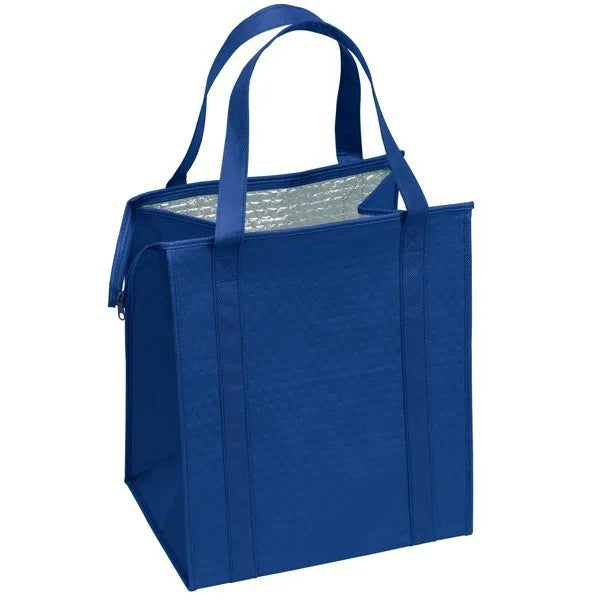
Bags and totes. A cotton canvas tote at 10oz minimum or a non-woven PP tote at 80gsm has one job—carrying things. Groceries, books, laptops, gym clothes. The brand sits on the side of something useful. A pattern that shows up again and again: teams that skip a pre-production sample almost always regret it by the second batch. The print looks different on 10oz canvas than on 8oz, and the handles tear differently too.

Drinkware. Ceramic mugs, stainless steel tumblers, and water bottles have become the modern standard for a reason. People use them daily. The brand sits on their desk or in their car. The key is quality—a mug that chips or a tumbler that leaks undermines the brand impression. For ceramic mugs, confirm the decoration method is dishwasher-safe. For stainless steel, specify the lid material and fit tolerance.

Apparel. Shirts, hats, and hoodies remain popular, but the quality threshold has risen. A 160gsm polyester performance shirt from the same factory that makes the 120gsm budget option feels completely different in the hand. The higher-quality one gets worn. The lower-quality one gets donated. For hats, embroidery consistently outperforms screen printing in perceived value and longevity.

Desk and office items. Sticky notes, notebooks, and metal pens fall into a different category—they're low-cost, high-utility items that work well for B2B giveaways. The trade-off is visibility. A pen with a small imprint gets noticed every time someone writes. A notebook with a cover logo sits on a desk for months. The brand impression is more subtle but more persistent.

📍 Related Sourcing Inventory / shirts

The stuff that doesn't work

It's worth being direct about this: novelty items with no practical purpose—stress balls, keychains, squishy toys—have a retention rate that makes them hard to justify. The recipient might smile when they pick it up. They will not remember where it came from a week later. The brand impression is fleeting, and the unit cost, while low, doesn't translate into meaningful exposure.

That said, we've seen exceptions. A well-executed novelty item that aligns with the brand's personality—a branded fidget toy for a tech company, a small plant kit for a wellness brand—can work. The key is relevance. The novelty needs to reinforce the brand story, not just fill a budget line.

  • Tote bags: High daily use; large branding surface; durable; practical for events
  • Drinkware: Daily use at home or office; high perceived value; visible branding
  • Quality apparel: Long-term wear; strong brand association; perceived as a gift
  • Desk items: Persistent presence; low cost per impression; practical
  • Stress balls: Low retention; limited branding visibility; easily discarded
  • Keychains: Oversaturated; small branding surface; low perceived value
  • Cheap pens: Break quickly; limited impressions; forgettable
  • Flimsy bags: Tear easily; reflects poorly on brand; rarely reused

The lead time reality

Coordinating a multi-item giveaway order is where the planning separates the smooth program from the frantic scramble. Each product category has its own production timeline, and they rarely align.

Apparel with screen printing typically runs 10–15 business days from sample approval. Drinkware with full-color wrap runs 15–20 days. Ceramics with sublimation can push 25 days. Custom packaging adds another 5–10 days. If you're assembling kits—bag plus mug plus notebook—the ship date is determined by the slowest item, not the fastest.

A detail that gets missed early on is that MOQ and price-break tiers rarely move in a straight line. The price drop from 100 to 250 units might be meaningful. The drop from 250 to 500 is often marginal. Buying extra units just to hit a price break doesn't save money if the extras sit in a closet. That's a fact.

A 15% buffer is standard practice across most event programs. That means if you expect 300 attendees, order 345. The buffer covers unexpected turnout, lost packages, defective units, and the team member who realizes they forgot to order for the VIP list. It's not waste. It's insurance.

What's easy to overlook is how much a single design revision late in the process can push back the whole timeline. Each artwork revision adds 1–2 days of review. Each sample round adds 5–7 days. The team that approves the design early and makes adjustments in the sample phase, not the production phase, has a much smoother experience.

The brand consistency question

The giveaway program is often the first tangible touchpoint a recipient has with your organization. The brand impression happens in the moment they open the bag or unwrap the item. That's why consistency matters.

A single Pantone PMS reference across all items is the baseline. But the same PMS color prints differently on cotton canvas than it does on ceramic mug glaze or embroidered thread. The fabric absorbs ink differently. The ceramic firing process shifts color temperature. The thread color options are limited by what the factory stocks.

The solution is simple but frequently skipped: order a sample of every item before approving the full run. See the logo on the actual material. Compare the colors under natural light. Adjust the artwork if needed. The sample phase exists to catch mismatches before they become 500 units of "close enough."

  • Add 15% quantity buffer to your final order—unexpected demand always happens
  • Confirm decoration method compatibility for each product and substrate
  • Request a pre-production sample of every item before bulk approval
  • Map lead times for all products and identify the critical path item
  • Confirm the supplier's last-safe-order date based on your event date
  • Assign a single Pantone reference and verify it on each substrate

What signals a good supplier for giveaway items

The supplier relationship matters more when you're ordering multiple product categories from multiple vendors. Here's what to look for.

Sample policy. A supplier who offers to credit the sample fee against the bulk order is a supplier who expects you to place the order. A supplier who charges for the sample and doesn't credit it is treating sampling as a revenue line.

Color matching process. A supplier who asks for Pantone references and describes their color-matching process is a supplier who can deliver consistent reorders. A supplier who just says "we'll match it" is a supplier who will match it once and guess the second time.

Multi-item coordination. A supplier who can coordinate with other vendors on your behalf—or who has a network of category specialists—can save significant coordination time. The trade-off is that they add margin. The question is whether the time saved justifies the cost.

Lead time transparency. A supplier who flags the gap between production time and delivered time, and who builds buffer into their quoted timeline, is a supplier who has been burned before. That experience is valuable.

Re-order clarity. Ask about reorders before you place the first order. Will the setup fees apply again? Will the per-unit price be the same? Will they retain your color formulas and digitizing files? A supplier who can answer these questions clearly is a supplier who expects you to come back.

Putting it together

A typical giveaway program—say, 300 welcome kits for a conference—might include a tote bag, a ceramic mug, and a branded notebook. The tote is screen-printed. The mug is full-color sublimation. The notebook is foil-stamped. Three different decoration methods, three different substrates, three different suppliers.

The lead time matrix: totes take 10–15 business days, mugs take 18–22 days, notebooks take 5–7 days plus 5 days for foil stamp setup. The critical path is the mugs. Everything else waits for them. Order the mugs first. The rest can be ordered in parallel.

Set a 15% buffer on the quantity: 345 of each item. Some will be samples. Some will be defect replacements. Some will cover the unexpected guests. The remaining 45 pieces can be held for reorders or future events. They don't go to waste.


📍 Related Sourcing Inventory / event


What buyers usually ask next

How much should I budget per giveaway kit? For a standard conference kit with a tote bag, mug, and notebook, budget $12–$18 per kit including decoration and packaging. Premium kits with embroidered apparel and stainless steel drinkware run $20–$35. The total program budget typically includes freight and 15% buffer quantity.

Can I order samples of all items before committing to bulk? Yes—this is standard practice and the best way to verify quality, color accuracy, and material feel. Most suppliers charge $20–$50 per sample and credit it against the bulk order. Order one sample of every item in your kit before approving full production.

How far in advance should I start planning a giveaway order? Start 8–12 weeks before your event for a multi-item order. Artwork design and approvals take 1–2 weeks. Sampling and revisions take 2–3 weeks. Production takes 2–4 weeks. Freight takes 1–2 weeks. Add a week of buffer for surprises. Earlier is always better.

What's the minimum order quantity for custom giveaway items? MOQs vary by product and decoration method. Screen-printed apparel typically starts at 25–50 pieces per design. Embroidery often starts at 25 pieces. Drinkware MOQs range from 50 to 100 pieces. Some suppliers offer lower MOQs for digital decoration methods (DTF/heat transfer) but at higher per-unit costs.

Add 15% quantity buffer to all event orders—unexpected attendees and lost packages happen every time.

Assign a single Pantone PMS reference across all multi-category event items to maintain brand consistency.

Confirm decoration method compatibility before finalizing a mixed-item event pack—sublimation on cotton doesn't work.
Order 1–2 extra samples of each item to keep as quality references for reorders.

Ask each supplier for their last-safe-order date based on your event delivery deadline.

Request a pre-production sample of every item in your giveaway pack before approving bulk production.
Underestimating production lead time when coordinating multi-category items from different factories—getting all products to land in the same warehouse on the same date is harder than it looks.

Mixing decoration methods without standardizing Pantone reference across items—navy on a screen-printed shirt and navy on an embroidered hat are rarely the same shade.

Ordering event merchandise without confirmed recipient count buffer—if 500 people show up and you ordered 450, someone is going home empty-handed.
Event agencies sourcing multi-item welcome kits for conferences and trade shows.

Marketing directors planning branded giveaways for product launches and brand activations.

Trade show booth managers ordering swag that actually draws people to the booth.

Conference coordinators assembling attendee bags with a mix of useful and memorable items.

❓ Buyer Questions

What's the most practical giveaway item that people actually keep?
Tote bags and drinkware consistently rank as the most retained giveaway items. A well-made tote with a clean logo gets used for groceries, books, or daily commutes. A ceramic or stainless steel tumbler stays on a desk or in a car. Both offer high visibility over time.

How do I choose between screen printing and embroidery for giveaway apparel?
Screen printing works best for large quantities (200+) and simpler designs—it's cost-effective and durable. Embroidery suits smaller runs and premium items, especially hats and polo shirts. The higher perceived value of embroidery often justifies the extra cost for smaller, more targeted giveaways.

What's the typical lead time for a multi-item giveaway order?
Allow 4–6 weeks from design approval to delivery for a mixed-item order from multiple suppliers. Screen-printed apparel typically runs 10–15 business days. Drinkware can take 15–20 days. Custom packaging adds another 5–10 days. Always add a buffer.

How do I ensure color consistency across different giveaway items?
Require a single Pantone PMS reference for your brand colors and ask each supplier to confirm they can match it on their specific substrate. Request a physical color sample on each material type—print on cotton looks different than print on ceramic.