What custom products provide hospitality and food service operators with the highest durability, brand visibility, and reorder repeatability under heavy commercial wash and kitchen environments?
You’re staring at two quotes that are $2 apart per unit and have no idea which number is the real one. In food service, custom gear takes a beating that standard corporate merchandise never sees. High-temperature commercial dishwashers running at 180°F, continuous grease exposure, and heavy industrial laundry cycles quickly turn consumer-grade apparel and cheap topical prints into faded rags.
Whether you are a small business owner juggling sourcing alongside a dozen other operational tasks or managing procurement for a growing multi-unit brand, spending capital on items that degrade after a month is a waste of working capital. To build a cohesive, polished presentation across front-of-house staff and off-premise takeaway channels, here is the exact shortlist of custom products that deliver maximum operational ROI, ranked in priority order.
The Food Service Priority Shortlist
- Priority 1: Heavyweight Poly-Cotton Canvas Aprons (280–350 GSM) — The absolute highest-ROI item for front-of-house branding and staff utility. Zero sizing risk, extreme wash durability, and high guest visibility at point of service.
- Priority 2: High-Fired Glazed Ceramic Mugs & Glassware — The premier tactile touchpoint for dine-in beverage service and retail merchandise sales. High margin potential and multi-year wash fastness.
- Priority 3: Heavyweight Cotton Staff Uniforms (200+ GSM Tees & Polos) — Essential for brand alignment across floor staff and kitchen prep teams. Requires strict fabric density standards to resist commercial laundry shrinkage.
- Priority 4: Custom Kraft Takeaway Packaging & Liners — The primary brand carrier for off-premise delivery and takeout channels. Low unit cost, high volume visibility, requiring food-contact compliance.
Priority 1: Heavyweight Canvas Aprons (The Front-of-House Workhorse)
If a restaurant or cafe can only invest in one custom product category this year, a 280 to 350 GSM poly-cotton canvas apron [IR] is the undisputed top choice.
What actually determines whether a custom apron survives six months of commercial kitchen laundering comes down to fiber blend ratio and reinforced stress-point bar-tacking, not graphic size. Cheap 100% cotton aprons (160–180 GSM) shrink dramatically in hot commercial dryers, absorb oil stains permanently, and tear where the waist ties meet the apron body [IE].
A commercial-grade apron utilizes an 65/35 Poly-Cotton Canvas Blend [IR]. The polyester fibers provide high tensile strength and stain resistance, while the cotton fibers maintain breathability and a natural hand-feel. Look for key physical construction details:
- Bar-Tacked Stress Points: Heavy X-pattern stitching at strap junctions to prevent tearing under load.
- Solid Brass or Stainless Hardware: Metal grommets and adjustment buckles that won't crack or melt during hot industrial drying cycles.
- Direct High-Density Embroidery: Thread decoration that meets ISO 105-C06 color fastness standards [DS] for commercial laundering, outlasting screen prints under harsh grease exposure.
From a procurement perspective, aprons eliminate sizing curve inventory errors. One adjustable bib apron size fits 95% of your staff cohort [IE], eliminating the hassle of managing leftover outlier clothing sizes in your storage room.
The Trade-Off: A quality 300 GSM poly-cotton canvas bib apron carries a higher initial unit cost ($12.00 to $18.00 landed) [IE] compared to a $4.50 promotional cotton apron [IE]. However, because the heavy canvas apron lasts 12–18 months in daily service instead of 6 weeks [IE], its true cost-per-shift is a fraction of the budget option.
Best Suited For: Baristas, floor servers, kitchen staff, and retail merchandise racks.
Priority 2: High-Fired Glazed Ceramics & Glassware (Daily Tactile Touchpoint)
For cafes and casual dining venues, custom ceramic mugs and glassware represent the most direct physical interaction a guest has with your brand during a visit.
The difference between a custom coffee mug that looks pristine after two years and one that flakes after two weeks comes down to firing temperature and decoration technique. Consumer print shops often use low-temperature screen inks or sublimation transfers cured at 300°F to 400°F [IE]. While these look vibrant in a sample box, high-alkaline commercial dishwasher detergents strip the decoration off within thirty wash cycles [IE].
Specify High-Fired Ceramic Decal Glazing or in-glaze decoration cured in kilns between 1,200°F and 1,400°F [IR]. At these temperatures, the ceramic pigment melts directly into the vitreous glaze layer, making the logo completely permanent, scratch-resistant, and compliant with ASTM C368 impact and thermal shock standards [DS].
In our experience, the first sample rarely tells you everything—it’s the second round after twenty commercial dishwasher passes that reveals what the factory actually controls. Requesting a physical dishwasher stress test on pre-production samples prevents costly multi-case rejections later.
The Trade-Off: Heavy ceramicware carries high shipping volume and weight. Parcel carriers bill freight based on Dimensional Weight or actual weight, whichever is higher [DS]. Shipping 200 ceramic mugs requires heavy cell-pack cardboard partitioning, raising freight overhead compared to lightweight soft goods.
Best Suited For: In-house espresso and coffee service, draft beer programs, and high-margin retail gift displays.
Priority 3: Heavyweight Cotton Staff Uniforms (Workwear Longevity)
When outfitting host stands, bus teams, or kitchen staff, heavyweight wearable tees and polos build brand structure and team alignment.
Standard promotional t-shirts (140–160 GSM open-end cotton) [IR] fail quickly in food service environments. Grease stains bind to cheap open-end fibers, collars stretch out after five washes, and side seams twist out of alignment [IE]. To maintain a crisp staff appearance, mandate 200+ GSM Combed Ring-Spun Cotton or 50/50 Heavyweight Workwear Blends [IR].
A detail that gets missed early on is that MOQ and price-break tiers rarely move in a straight line. When ordering staff shirts, avoid complex 4-color chest graphics. Stick to single-color screen prints or clean left-chest embroidery. Single-color decoration minimizes screen setup charges ($35–$50 per color) [IR], making it affordable to place small 12-unit top-off reorders [IR] when hiring new staff mid-season.
The Trade-Off: Apparel requires managing size curves (S through XXL). To prevent running out of Medium and Large sizes while holding excess Small or XXL stock, collect real staff sizing metrics before issuing purchase orders, or follow a standard 1-2-2-1 collegiate distribution ratio [IE].
Best Suited For: Front-of-house uniforms, kitchen prep teams, and seasonal event staff.
Priority 4: Custom Kraft Takeaway Packaging & Liners (Off-Premise Reach)
With takeout and delivery representing a massive portion of modern food service revenue, custom printed packaging extends your venue's atmosphere directly into the customer's home.
Custom packaging includes natural kraft paper bags, greaseproof sandwich wrapping sheets, and custom-printed corrugated mailer boxes for delivery kits. What actually determines packaging safety is strict compliance with FDA 21 CFR 175.300 and 21 CFR 176.170 standards [DS] for direct food contact and vegetable-based soy ink formulations.
One pattern worth noting: teams spend hours comparing unit prices while barely asking how warehousing and storage are handled. Custom paper packaging carries huge volume price breaks—ordering 10,000 custom paper bags drops the unit cost significantly compared to ordering 1,000 units [IE]. However, 10,000 bags occupy multiple pallet spaces in your backroom.
The Trade-Off: High storage footprint. If backroom storage space is limited, partner with a distributor that offers local split-shipment warehousing, or stick to high-density flat items like custom greaseproof basket liners that store flat under counter tops.
Best Suited For: To-go food orders, bakery packaging, and delivery fulfillment.
- Specify 280–350 GSM poly-cotton canvas with bar-tacked stress points for all staff aprons
- Mandate high-temperature kiln firing (1,200°F+) for all custom ceramic mugs and glassware
- Select 200+ GSM combed ring-spun cotton or workwear blends for staff uniform shirts
- Verify FDA 21 CFR 175.300 food-contact compliance for printed paper packaging and liners
- Standardize artwork to 1-color vector passes to minimize setup fees on small reorders
The Single Tie-Breaker Factor: Screen & Mold Tooling Retention
When deciding between two strong product categories or suppliers that both fit your initial budget, the single factor that should break the tie is Supplier Tooling Retention Policy.
Food service operations rely on constant, small-batch reorders as staff turns over or store volume spikes. If a supplier purges your printing screens, embroidery digitizing files, or ceramic decal films after six months of inactivity, you will be forced to pay new setup fees ($35 to $75 per line item) [IE] every time you place a small top-off order.
Always choose suppliers that offer permanent or 24-month guaranteed tooling retention on custom artwork files and screens. Ensuring your artwork files remain permanently archived allows you to reorder 12 new aprons or 36 ceramic mugs with zero setup friction and 100% color-matching consistency.
What Buyers Usually Ask Next
How do I handle staff uniform sizing for high-turnover restaurant roles?
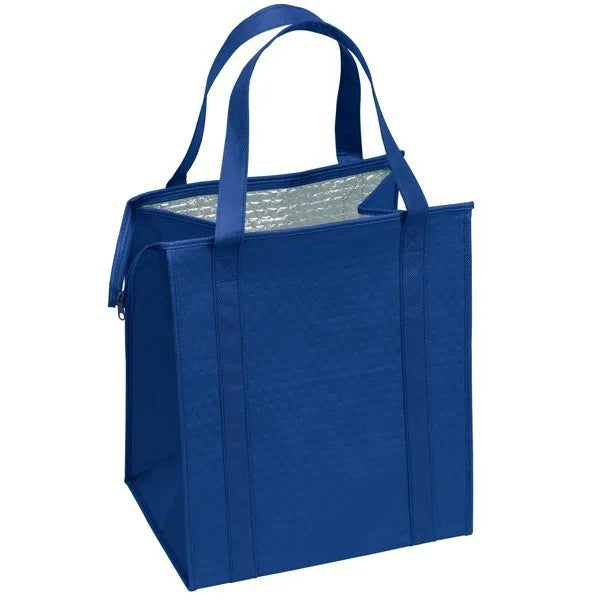
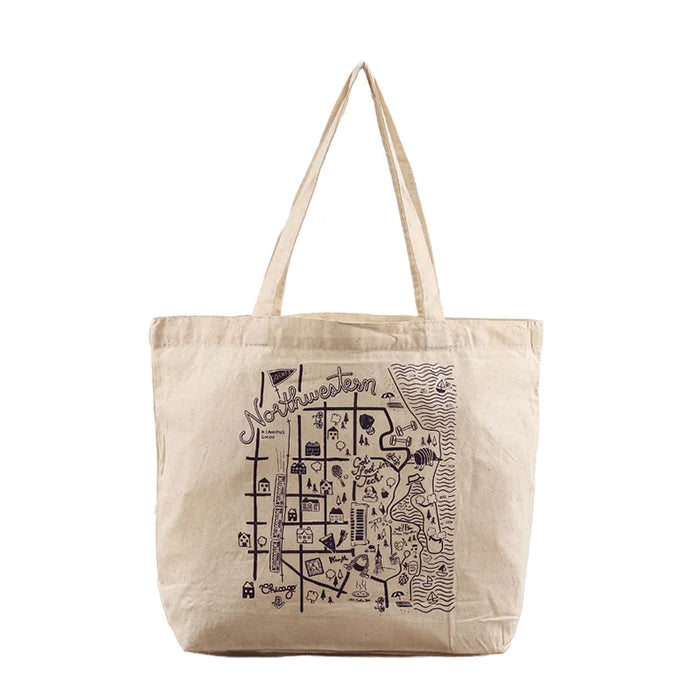
To reduce sizing inventory headaches, shift as much staff gear as possible to single-size form factors (such as adjustable canvas bib aprons, custom hats, or branded totes). For required uniform shirts, maintain a buffer stock using standard mill stock colorways (Black or Navy) so you can order small 12-unit top-offs from domestic warehouse stock in 5 to 7 days [IR].
What is the most durable decoration method for high-use restaurant aprons?
Direct high-density embroidery or woven fabric patches sewn with heat-resistant polyester thread offer the longest lifespan on commercial aprons. Unlike topical vinyl heat transfers or cheap screen prints, embroidery withstands high-temperature commercial washing, grease exposure, and bleach cycles without peeling or cracking.
How far in advance should a restaurant order merchandise for a new store opening?
Place primary custom merchandise and uniform orders 6 to 8 weeks prior to your scheduled opening date [IR]. This window accommodates vector artwork proofing (3–5 days) [IR], physical sample approval (7–10 days) [IR], primary manufacturing (14–21 days) [IR], ground transit (3–5 days) [IR], and leaves a mandatory 7-day administrative buffer for receiving and sorting at the venue.