Low MOQ Custom Tote Bags for Startups
A custom printed tote bag functions as a mobile billboard for your brand. Because consumers carry durable bags daily to offices, grocery stores, fitness centers, and weekend outings, a well-designed tote bag generates continuous public visibility. Achieving commercial success with small-batch bags requires balancing fabric selection, handle construction, decoration technologies, and unit pricing. Understanding how factories manage short production runs allows startup founders to source high-grade merchandise that aligns with brand positioning while maintaining healthy profit margins.
Sourcing low minimum order quantity (MOQ) custom tote bags enables startups, boutique retailers, direct-to-consumer brands, and independent cafe operators to introduce merchandise programs without committing large amounts of working capital. In traditional bag manufacturing, factories often demand minimum orders ranging from 1,000 to 5,000 pieces per style. For an emerging business testing market interest or building an initial product collection, holding thousands of unproven units in inventory introduces significant financial risk and ties up essential cash flow. Small-batch manufacturing solves this barrier by allowing brands to order precisely what they need.
1. Understanding Minimum Order Quantities for Custom Tote Bags
Minimum Order Quantity defines the smallest unit count a bag manufacturer or print shop agrees to produce in a single production run. Factory minimums exist because setting up production lines requires dedicated labor and machine downtime. Cutting fabric rolls, recalibrating automated sewing heads, mounting printing screens, and running test units create fixed setup costs. On large production runs, these setup expenses spread across thousands of units, resulting in a low cost per piece. On small orders, setup expenses represent a larger portion of total manufacturing cost.
Sourcing thresholds for custom tote bags break down into four distinct operational tiers:
- No Minimum Tier (1 to 5 Units): Ideal for physical sampling, content photo shoots, or testing a single boutique prototype. Print suppliers utilize stock blank bags and digital direct-to-garment (DTG) or direct-to-film (DTF) transfers. Unit costs are higher, typically ranging from $15 to $35 per bag, but initial dollar risk remains near zero.
- Ultra-Low MOQ Tier (5 to 15 Units): Suitable for micro-events, limited staff uniforms, or pilot pop-up drops. Specialized small-batch workshops accept these volumes by using standard stocked blank colors. Logo embroidery options often open up at around 6 pieces.
- Small Business Tier (15 to 50 Units): The primary sweet spot for emerging retail brands and independent cafes. At this volume, full screen printing and custom woven label attachments become commercially viable, dropping per-unit costs significantly before requiring large wholesale commitments.
- Commercial Wholesale Tier (100 to 500+ Units): Unlocks custom fabric dyeing, specialized hardware trims, custom interior lining prints, and bulk volume price breaks.
Distinguishing between decorated stock blank sourcing and custom cut-and-sew manufacturing is essential when reviewing supplier minimums. Decorating pre-made blank bags allows suppliers to accept orders under 50 pieces because the bag body is already assembled. Custom cut-and-sew manufacturing—where the factory cuts raw canvas rolls, sews custom bag dimensions, adds interior zip pockets, and dyes fabric to exact Pantone shades—typically requires a minimum of 300 to 500 units to justify material cutting setups.
2. Why Startups and Emerging Brands Require Low MOQ Manufacturing
Adopting a low MOQ sourcing strategy changes how emerging direct-to-consumer brands and boutique retailers manage product development and inventory risk. Flexibility and speed to market provide strategic advantages when competing against established market players.
Preserving Cash Flow and Mitigating Risk: Capital preservation is a core priority for new business operators. Investing $500 to test a 30-piece tote bag drop preserves capital for digital marketing, cafe operations, or inventory expansion. Allocating $10,000 to a massive 2,000-piece order before validating customer interest creates financial exposure if sales velocity slows down.
Speed to Market and Real-Time Testing: Direct-to-consumer brands rely on fast execution. Small-batch manufacturing moves custom bags from artwork confirmation to customer delivery in two to three weeks rather than three to four months. Startups can test three distinct graphic concepts or colorways simultaneously in 25-piece batches, gather real sales data, and immediately reorder the top-performing design.
Boutique Exclusivity and Seasonal Drops: Small production batches allow retailers and cafes to create limited-edition seasonal merchandise. Releasing 50 numbered canvas totes for a summer campaign or a holiday roast drop builds customer urgency and perceived value. Once sold out, the retailer transitions to a new seasonal design without managing leftover obsolete inventory.
Corporate Campaigns and Strategic Swag: For event organizers and corporate brand managers, low MOQ sourcing allows procuring custom registration bags or VIP sponsor gifts tailored to specific attendee counts, avoiding excess leftover event collateral.
3. Selecting Tote Bag Styles, Fabric Weights, and Substrates
Selecting the appropriate material substrate dictates how a tote bag holds its shape, feels in the hand, and withstands daily wear. Canvas fabrics are categorized by weight in ounces per square yard (oz) or grams per square meter (GSM). Matching material weight to your intended product positioning ensures the finished bag satisfies customer expectations.
Standard tote bag fabric options break down across distinct performance tiers:
- Lightweight Cotton (4oz to 6oz / 135 to 200 GSM): Economical, plain-weave cotton fabric. Lightweight cotton bags fold flat easily and work well for single-day promotional giveaways, trade show registration bags, or basic gift-with-purchase items. However, lightweight cotton lacks structural rigidity and exhibits transparency under bright light.
- Mid-Weight Cotton Canvas (8oz to 10oz / 270 to 340 GSM): A versatile, sturdy plain-weave fabric. Mid-weight canvas provides solid structural body, opacity, and daily durability while remaining comfortable to carry. It serves as a dependable standard for cafe merchandise and casual retail bags.
- Heavyweight Cotton Duck Canvas (12oz to 14oz / 400 to 470 GSM): The benchmark substrate for high-grade retail merchandise, boutique bags, and rugged lifestyle accessories. Heavy duck canvas features a dense, tightly woven construction that holds its boxy shape when empty, resists heavy abrasion, and carries heavy loads like laptops and books without strain.
- Recycled rPET Canvas (8oz to 12oz): Manufactured from post-consumer recycled polyethylene terephthalate (plastic water bottles). Recycled rPET canvas provides identical tensile strength and durability to virgin polyester or cotton blends while satisfying strict sustainability requirements. Sourcing Global Recycled Standard (GRS) certified rPET canvas allows eco-focused brands to market verified environmental claims.
- Organic Cotton Canvas (8oz to 12oz): Woven from cotton grown without synthetic pesticides or chemical fertilizers. Sourcing GOTS (Global Organic Textile Standard) certified canvas ensures social and environmental compliance throughout the fabric supply chain.
Structural bag dimensions and gusset construction also influence utility. Flat totes (without side or bottom depth) suit lightweight items and flat documents. T-gusset bags introduce a bottom fold that expands when loaded. Full-gusset totes incorporate dedicated side and bottom panels, creating a spacious three-dimensional interior box structure ideal for groceries, beach gear, and daily commuter carry.
4. Comparing Decoration Methods: Digital Printing vs. Screen Printing vs. Embroidery
Selecting the correct decoration process impacts artwork sharpness, wash longevity, and per-unit production cost. Decoration decorators evaluate graphic complexity, artwork color count, fabric substrate type, and total order volume when selecting printing methods for small-batch orders.
Digital Direct-to-Garment (DTG) & Direct-to-Film (DTF): Digital printing uses specialized inkjet heads to spray water-based or pigment inks directly onto fabric fibers or onto a transfer film that is heat-pressed onto the bag. Digital printing excels at multi-color artwork, fine line details, and photographic illustrations because it requires zero physical printing screens or color separation setups. It represents the primary decoration method for orders under 25 units. The trade-off is a slightly higher per-unit print cost and moderate ink opacity on dark-colored canvas unless a white underbase layer is applied.
Rotary Screen Printing: Screen printing forces liquid ink through fine mesh screens onto fabric surfaces. Screen printing delivers rich color opacity, exact Pantone Matching System (PMS) color matching, and long-term commercial wash durability. However, every distinct color in a design requires a separate film positive and physical screen setup fee (typically $25 to $45 per screen). For a 4-color logo on an order of 30 bags, screen setup charges add substantial overhead to the unit cost. For single-color or 2-color graphics above 30 units, screen printing remains the most economical option.
High-Density Logo Embroidery: Embroidery uses automated multi-needle sewing heads to stitch colorfast polyester or rayon threads directly into heavy canvas. Embroidery provides a raised, three-dimensional texture that communicates craftsmanship. It works exceptionally well for small chest-style logos, brand icons, and typography on 12oz heavy canvas totes. Embroidery setup requires a one-time digitizing fee to convert artwork into needle stitch paths, but stitch counts remain cost-effective on small-to-medium runs.
Dye Sublimation: Applied exclusively to 100% synthetic polyester or high-content rPET fabrics. Sublimation uses heat and pressure to gasify dyes directly into polyester fibers, producing full-bleed artwork that never cracks, peels, or fades. Sublimation allows printing edge-to-edge artwork across the entire fabric panel before bag assembly.
5. Small-Batch Customization Options and Trimming Details
Customizing secondary structural elements transforms a basic commodity tote bag into a distinctive retail product. Small-batch manufacturers offer modular trimming options that allow brands to personalize bags without triggering high OEM volume requirements.
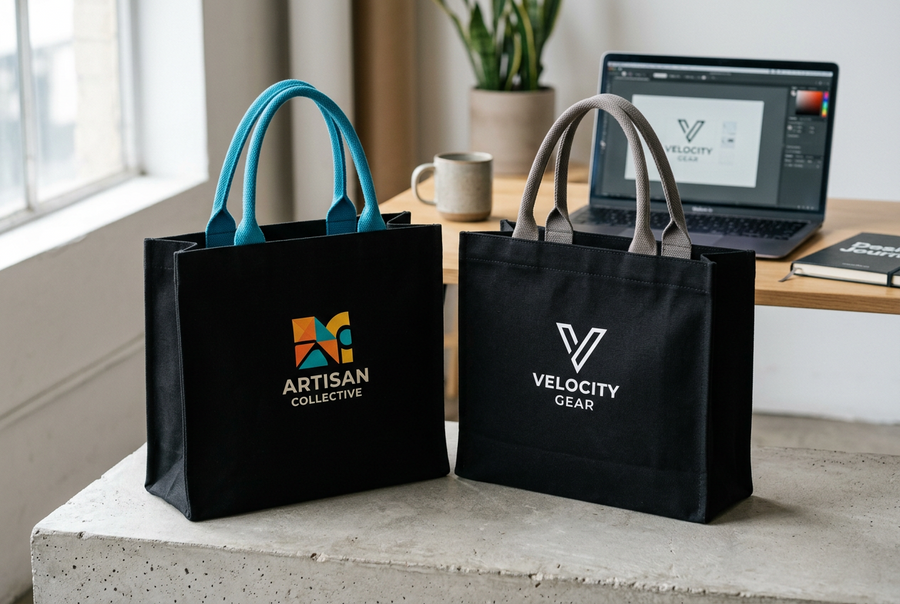
Handle Construction and Drop Length: Handles represent a primary tactile touchpoint for users. Standard flat self-fabric handles use the same canvas as the bag body. Heavy-duty cotton webbing handles provide a thicker, comfortable grip for heavy loads. Rolled rope handles or contrast-colored webbing add visual interest. Ensure the handle drop length (the vertical distance from the top of the bag rim to the peak of the strap) measures at least 11 to 12 inches to allow comfortable shoulder carrying over winter coats.
Closures and Internal Organization: Adding a top closure prevents contents from spilling out during travel. Options include metal press-stud snaps, magnetic closures, or full-length nylon coil zippers. Adding an interior hanging zip pocket or open slip pocket provides a dedicated space for keys, phones, and wallets, elevating bag functionality.
Custom Branding Labels and Hardware: Applying custom woven main labels, satin care labels, or outer seam flag tags reinforces brand identity. Woven labels can be produced in small batches (100 to 300 pieces) and sewn into bag top-hems or side seams during assembly. Metal rivet reinforcements at handle stress points and custom printed cardboard hang tags complete the retail presentation.
6. Low MOQ Sourcing Process: From Concept to Quality Inspection
Navigating small-batch tote bag production smoothly requires following a structured project timeline from initial artwork submission through final delivery. Establishing clear approval checkpoints prevents manufacturing errors and keeps delivery schedules on track.
Phase 01 — Design and Vector Artwork Confirmation: Submit production-ready vector artwork files (.AI, .EPS, or vector .PDF) to your manufacturer. Convert all typography to outlines and specify exact Pantone PMS solid coated color numbers for screen printing or thread codes for embroidery. Confirm bag dimensions, handle length, gusset depth, and pocket placements in a written technical specification sheet.
Phase 02 — Material and Colorway Selection: Choose your fabric substrate, canvas weight, and fabric colorway from the manufacturer's stock fabric swatch library. Utilizing active stock colors avoids raw material dyeing minimums and shortens production lead times.
Phase 03 — Pre-Production Sample Development: Always request a physical pre-production sample before authorizing mass assembly. Inspect the physical sample to verify fabric weight, stitching density, print positioning, color accuracy, and handle cross-stitch durability. Conduct a real-world load test by placing heavy books inside the sample bag and checking seam behavior.
Phase 04 — Small-Batch Mass Assembly: Once the pre-production sample is approved in writing, the factory proceeds with fabric cutting, panel printing or embroidery, and final stitching assembly. Dedicated small-batch lines ensure individual attention to detail across every unit.
Phase 05 — Quality Inspection and Testing: Every completed bag should undergo quality control evaluations prior to packaging. Essential inspection checkpoints include:
- Visual Inspection: Checking for loose threads, print registration alignment, ink smudges, or fabric blemishes.
- Dimensional Verification: Measuring bag width, height, gusset depth, and handle drop length against technical specifications.
- Seam and Handle Tensile Testing: Pulling firmly on handles and side seams to confirm stitch integrity and cross-stitch reinforcement.
- Needle Inspection: Passing finished goods through a metal/needle detector machine to ensure broken sewing needles are eliminated before export packaging.
Phase 06 — Packaging and Freight Logistics: Finished bags are folded, packed in master cartons, and shipped via air express (for urgent drops under 100 pieces) or consolidated ocean freight. Specify whether individual polybag packaging or custom cardboard hangtags are required for retail display.
7. Sourcing Cost Breakdown and Decision Matrix
Evaluating small-batch tote bag production costs requires understanding how fabric selections, printing methods, order quantities, and packaging options contribute to total landed costs. Ordering quantities closer to standard wholesale thresholds significantly amortizes fixed setup charges across unit counts.
The primary cost drivers for custom tote bags include:
- Fabric Yardage Cost: Standard 6oz cotton is economical; 12oz heavy duck canvas increases unit costs by 40% to 60%; GRS-certified rPET or organic cotton canvas carries a 20% to 30% material surcharge over standard cotton.
- Decoration Setup Fees: Screen printing involves per-color screen charges ($25 to $45 per screen); embroidery requires a one-time digitizing fee ($30 to $60); digital DTG printing carries zero setup fees but higher per-unit ink costs.
- Structural Trims & Hardware: Adding top zippers, interior hanging pockets, metal rivets, or heavy webbing handles adds $0.75 to $2.20 per bag in labor and component costs.
- Freight Shipping: Air express freight delivers goods in 3 to 7 business days but carries higher costs per kilogram; ocean freight consolidation requires 3 to 5 weeks but drastically lowers unit shipping costs on heavy canvas orders.
Reviewing operational benchmarks across primary tote bag options assists in mapping production budgets:
| Option | Best For | MOQ Range | Key Trade-Off | Typical Lead Time |
|---|---|---|---|---|
| Stock Blank Customization | Immediate event drops & prototyping | 1 - 15 units | Higher unit cost; limited structural changes | 1 - 2 weeks |
| Small-Batch Factory Run | Boutique retail lines & brand launches | 25 - 100 units | Fixed material colorways; moderate setup fee | 2 - 3 weeks |
| Recycled rPET Canvas | Eco-focused brands & corporate swag | 50 - 250 units | Higher fabric cost per yard | 3 - 4 weeks |
| Custom OEM Production | Scaled retail distribution & custom trims | 500 - 2,500+ units | Substantial capital commitment; longer setup | 4 - 6 weeks |
8. Strategic Sourcing Guidance for Startup Growth
Establishing a successful small-batch tote bag line provides a solid foundation for scaling your brand's merchandise program. As sales velocity builds, transitioning from small pilot batches to regular wholesale orders enables unlocking volume price breaks and expanded customization options.
Build Vendor Partnerships Based on Quality: Work with suppliers who demonstrate strict quality control, transparent communication, and flexible small-batch options. A reliable factory partner that supports your brand during initial 30-piece drops becomes an invaluable asset as your order volumes scale to 500 or 1,000 pieces.
Maintain Clear Technical Records: Keep organized digital archives of all approved tech packs, vector artwork files, Pantone color references, woven label samples, and pre-production inspection notes. Providing consistent technical documentation during reorders ensures color and stitch uniformity across consecutive production runs.
Monitor Sales Velocity and Reorder Triggers: Track inventory depletion rates continuously. Because small-batch production and shipping require two to three weeks total, initiate reorder production when inventory drops to three weeks of projected sales. Maintaining proactive reorder schedules prevents stockouts on top-selling SKUs, ensuring your custom tote bag line continues generating steady retail revenue and organic brand visibility.
Sourcing low MOQ custom tote bags empowers startups and emerging brands to launch merchandise lines safely, validate market demand, and scale sustainably. By choosing heavy canvas fabrics, selecting appropriate decoration methods, enforcing thorough pre-production quality checks, and managing cash flow wisely, your business can build durable, stylish carry goods that supporters carry proudly every day.