How Many Pieces Should I Order for My First Custom Product?
So, How Many Pieces Should You Actually Order for Your First Custom Product?
Real talk from people who’ve been there — no corporate fluff, just straight advice on MOQs, inventory, and sanity.
You've got the design ready, the logo looks fire, and you're one step away from holding your first custom product. Then a supplier hits you with: "Our MOQ is 500 pieces." Cue the internal panic. Do you take the leap? Scale down? Order 50 and pray? I've been there — scrolling through forums, DM-ing other brand owners, wondering if ordering 200 hoodies will be the best decision or the one that fills your garage for the next two years. Let's break down the real-world answer, because the truth is: there's no magic number, but there is a smart way to figure it out.

Let's Talk About MOQ (It's Not as Scary as It Sounds)
MOQ — minimum order quantity — is the smallest number of units a supplier will make for you. It exists because manufacturers have fixed costs: setting up machines, cutting fabric, mixing inks. If they only made 10 shirts, they'd lose money. So they set a floor. For fully custom pieces (your own patterns, labels, custom cuts), MOQs can sit around 75–100 units per style. But here's the good news: low‑MOQ specialists have popped up everywhere, offering runs of 50 pieces or even less.[reference:0] Some print shops will screen print as few as 20–24 garments per design.[reference:1] And if you're doing print‑on‑demand? You can order one single piece to test the waters. MADAD
Bottom line: MOQ isn't a wall — it's a negotiation starter. The real question isn't "what's the MOQ?" but "what's the smallest order I can place without sabotaging my own cash flow?"
By The Numbers: What Different First Orders Actually Look Like
I asked around in communities where brand owners hang out, and here's what I found. Most new clothing lines launch with anywhere between 1 and 5 styles, and 50–100 units per style. That lands you at a total of 200–500 pieces for the whole launch.[reference:2] But that's just average. Let's get more specific based on what you're making:
| Product type | Typical first order (units) | Why this range works |
|---|---|---|
| Custom T‑shirts (screen print) | 24–100 | Most print shops require at least 24–50 to cover screen setup costs. Start at 50 to test designs.[reference:3] |
| Custom hoodies / sweatshirts | 50–150 | Higher production cost, but customers love them. 50 is a safe bet for a first drop. |
| Embroidered hats | 30–100 | Low‑MOQ hat makers exist — some do runs of 25–50 without crazy price per unit. |
| Tote bags / accessories | 50–200 | Accessories have lower risk — easier to store, cheaper to ship. 100 tote bags won't overwhelm you. |
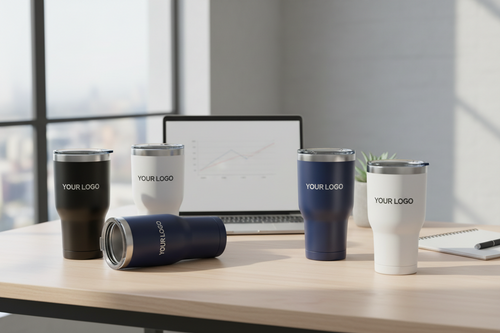
| Custom drinkware / mugs | 50–100 | Print methods have low setup fees. Order 50, see how they move before scaling. |
| Fully cut‑and‑sew garments | 75–150 | Custom patterns need higher minimums. Some low‑MOQ factories start at 75.[reference:4] |
Notice a pattern? Almost every category has a "test first" quantity between 25 and 100. That's your sweet spot. Not so tiny that you can't learn anything, not so big that you're drowning in inventory.
The “I Ordered 500 Pieces and Regret It” Club (True Stories)
A while back, someone in an entrepreneur group shared how they picked a supplier that demanded 300 pieces per color and style. With 10 styles and 3 colors, that would have meant 9,000 units and a $90,000 investment.[reference:5] They walked away, found a low‑MOQ partner, and launched with 150 units instead. Another brand owner I know ordered 600 custom mugs for a launch. They sold 80 in the first month. The other 520 are still stacked in their basement, staring at them every time they do laundry.
The lesson isn't "don't order large quantities." It's: earn the right to order large quantities. Validate demand first. Pre‑sell if you can. Start with a small batch, then reorder the winners. The brands that grow sustainably almost always start tiny and scale what works.
Factors That Change Everything: What You Need to Calculate Before Ordering
Before you hit "confirm" on that purchase order, run these five numbers. They'll save you from post‑order regret.
- Your real budget (not just product cost). Landed cost = price per unit + shipping + any customs/duties. A $10 shirt becomes $13–15 after freight. Budget accordingly.
- Storage space. Can you fit 200 boxes in your apartment? Your mom's garage? Be honest. Storage stress is real.
- Time to sell. If you think you'll sell 50 shirts per month, ordering 500 means 10 months of sitting on inventory. That's a long time for cash to be tied up.
- Variety vs. depth. Would you rather have 3 designs with 100 pieces each, or 1 design with 300 pieces? Most first‑timers benefit from variety — test what people like, then go deep on the winner.
- Supplier minimums vs. your risk tolerance. A supplier who demands 500 units might not be the right partner for a first order. Look for low‑MOQ manufacturers (like SupplyBatch’s apparel collection where some products start at 50 pcs).
How To Find Suppliers That Actually Work With Small First Orders
“Minimum Order Quantity” used to be a dirty phrase for startups. Not anymore. Low‑MOQ manufacturing has exploded because factories realized small brands today become big brands tomorrow. Many now offer what's often called "low MOQ" — typically 50–300 units per style, sometimes even lower.[reference:6] Screen printers these days will run 24–50 pieces per design. If a supplier refuses anything under 500, walk away. There are plenty of others who will happily take your first 100‑unit order.
Where do you find them? B2B platforms, search for "low MOQ clothing manufacturer," or check out SupplyBatch — flexible minimums starting from 50 pieces, with clear timelines and sample options before full production. The key is to ask upfront: "Can you do a test run of X units?" If they say yes, you're on the right track.


Should You Sample First? (Spoiler: YES)
Never, ever skip the sample. I don't care how pretty their catalog looks. Order one physical sample — sometimes called a "pre‑production sample" — to check fabric, fit, colors, and print quality. Some manufacturers will deduct the sample cost from your bulk order later.[reference:7] Others charge a small sampling fee. Consider that fee the cheapest insurance you'll ever buy. Imagine ordering 200 custom hoodies and discovering they're the wrong shade of your brand color, or the print cracks after one wash. Samples prevent that nightmare.
Ask for a physical sample using your exact specs.
Check stitching, color accuracy, feel, and sizing.
Don't approve unless you're genuinely happy.
25–100 units, depending on your product.
Print‑On‑Demand (POD): The Zero‑Risk Alternative (Seriously)
Hate the idea of buying 200 shirts upfront? Welcome to print‑on‑demand. You design, you upload, and products only get printed when someone actually places an order. Zero inventory, zero boxes in your living room. The trade‑off: higher per‑unit cost (sometimes double the bulk price) and lower margins — but also zero risk. Many successful brand owners start with POD to validate designs, then switch to bulk orders once a product proves itself.[reference:8]
If your priority is testing ideas rather than maximizing margin, POD is your best friend. Once you see that one hoodie design selling consistently, then you consider ordering 100 of them at a lower cost per unit. Smart, right?
Negotiation Isn't Just for Big Players — Here's How You Do It
You don't need to be a Fortune 500 brand to negotiate a lower MOQ. Manufacturers want repeat business. Here's what works:
- Be honest about your stage: “I'm a new brand, I'd love to start with 75 pieces and if quality is great, my next order will be 200.” Transparency builds trust.[reference:9]
- Offer a compromise: “Can we reduce MOQ if I use your stock fabric instead of custom colors?” Using in‑stock materials often lowers minimums significantly.[reference:10]
- Show long‑term potential: Suppliers value future volume. Frame your small order as a “test run” leading to a consistent partnership.
- Order one style, multiple colors: Instead of 3 separate low‑MOQ orders, combine them into one larger order — manufacturers often accept mixed colors toward the same MOQ.
Real‑World Examples: What First Orders Look Like in the Wild
I pulled some real examples from conversations with brand owners who spilled the tea on their first production runs:
- Streetwear startup: 70 hoodies, 3 colorways. Sold 60 in 4 weeks via Instagram. Second order: 200 hoodies.
- Custom tote bag brand: Ordered 100 units. Sold half at a local market, rest online. Reordered 300 after 2 months.
- Small activewear brand: 150 pieces per style (tops and shorts). First collection profit margin: 48%. Now ordering 500+.[reference:11]
- Kids’ accessory shop: Started with 50 custom keychains. Within 3 months, keychains became their bestseller and now they order 500 at a time.
Notice the pattern? Nobody ordered a thousand units blind. They started small, learned fast, and scaled the winners.


How To Avoid the Inventory Heartbreak (Dead Stock = Sad Stock)
Dead stock is the stuff that never sells. It's the boxes under your bed, the tote bags collecting dust, the mugs you priced at 50% off just to get them out of your sight. To avoid becoming a dead stock hoarder:
- Start with pre‑orders if possible: Collect orders before production. Cash upfront, zero guesswork.
- Choose versatile products: Unisex sizes and neutral colors have broader appeal than hyper‑specific niche pieces.
- Limit SKUs on launch: 3–5 products max. More SKUs = more complexity, more unsold variations.
- Plan a small restock buffer: Order 10–20% extra for samples, giveaways, or unexpected demand. Not 200% extra.
One brand owner told me: "I only order what I can store in two IKEA shelves. If it doesn't fit, I don't order it." That constraint forced her to be ruthless — and profitable.
Your First‑Order Cheatsheet (Save This)
Before you finalize any order, run through this quick checklist:
- ✅ Sample ordered and approved? (Don't skip.)
- ✅ Landed cost calculated? (Product + shipping + fees.)
- ✅ Storage plan in place? (Garage, closet, spare room?)
- ✅ Sales channel ready? (Site, pop‑up, social, marketplace?)
- ✅ Reorder plan? (Know what signals mean “order more.”)
- ✅ Supplier MOQ matches your cash comfort level? (If it feels scary, it's too big.)
So, What's The Magic Number?
After all this — the stories, the numbers, the negotiation tactics — what's the actual number for your first custom product? Here's my honest advice: start between 25 and 100 units for your first run if you're doing a simple custom product like printed T‑shirts or hats. For more complex products (cut and sew, custom packaging), aim for 75–150. And if you're terrified of any inventory at all? Start with print‑on‑demand, sell 10–20 units, then use that data to inform a small bulk order.
The perfect order quantity isn't a universal number — it's the highest quantity you can afford to lose. Because until you've tested your product and your audience, everything is an experiment. Give yourself room to experiment without burning your savings. You can always order more. Getting rid of extra inventory? That's the hard part.
Ready to start your first custom run? Check out SupplyBatch’s custom apparel with low MOQs starting at 50 pieces, or browse drinkware and bags & travel collections. Get a sample first, test the quality, then scale like a pro. Your future self (and your garage) will thank you.
Now go order that sample — and start small. You've got this. 🚀
🎯 Bottom line
First custom order? Stick to 25–100 units for simple products, 75–150 for complex ones. Test, learn, reorder winners. Never bet the farm on your first drop.
- MOQs are negotiable — especially for new brands.
- Sample first, always. It's cheap insurance.
- Dead stock is expensive. Start smaller than you think.
- POD removes inventory risk for absolute beginners.
- Reordering a winner > overordering a guess.
❌ Skipping the sample and ordering 500 units blind.
❌ Not calculating landed cost — shocked by shipping fees.
❌ Ordering 10 different designs before validating any of them.
❌ Choosing a supplier solely on price (cheap often means delays/bad quality).
❌ Buying large quantities because "the per‑unit price is better."
📘 Terms to know
MOQ — Minimum order quantity.
Landed cost — Total cost after shipping, fees, duties.
Sample/PP sample — Pre‑production piece to verify quality.
Dead stock — Unsold inventory taking up space and cash.
Low‑MOQ — Supplier willing to produce 50–300 units.


🔍 Questions to ask any supplier
"What's your lowest MOQ for a test order?"
"Can I order a physical sample before committing?"
"What's your lead time for 50 units?"
"Do you offer mixed sizes/colors to reach MOQ?"
"Can you share photos of similar past orders?"


📚 Explore ready‑to‑order
👉 Custom Apparel
👉 Bags & Travel
👉 Drinkware
👉 Office & Business
👉 Blog & Sourcing Tips