Custom Products for Startups: What Actually Works
You have a budget, a brand guide, and a launch date. Someone on your team suggested branded mugs and T‑shirts. Someone else wants power banks. Now you are staring at a spreadsheet with seven different suppliers, three different lead time promises, and a creeping suspicion that this is going to be more complicated than it looks.
It does not have to be. The difference between a merch program that lands on time and on brand, and one that arrives late with three different shades of your logo color, comes down to a handful of decisions made upfront. This article walks through exactly those decisions.
1. What Startups Actually Need from Custom Products
Most startup merch programs fail not because the products are low quality, but because they were chosen for the wrong reasons. A founder picks a product they personally like. A marketing coordinator goes with whatever supplier responds fastest. A procurement lead approves a sample that looks good on a screen but feels cheap in hand.
The real question is not "what looks cool" but "what does this program need to accomplish." Are these for new-hire onboarding — items that will sit on a desk and be seen daily? Trade show giveaways — where weight and packability matter more than premium feel? Executive gifts — where material quality and presentation outweigh per‑unit cost?
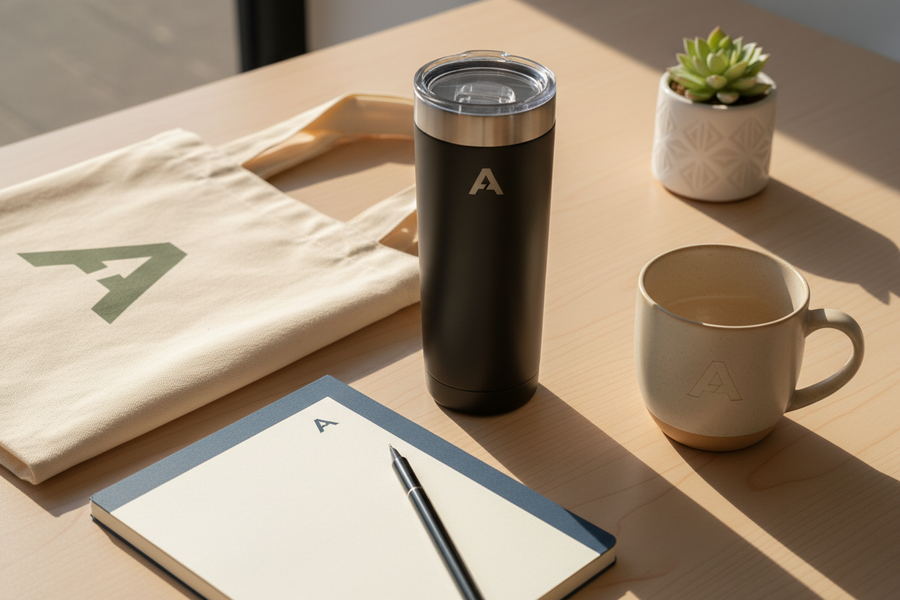
Once you define the job each product needs to do, the category choices become clearer. Apparel works for team identity and events. Drinkware has high daily visibility in offices. Tech accessories get used and remembered. Stationery and notebooks have a longer shelf life than most swag. The mistake is treating them all as interchangeable.
2. How Cross-Category Substrate Comparison Actually Works in Practice
Every product category has its own production rhythm, material constraints, and decoration quirks. A 500‑unit run of custom T‑shirts might ship in 10 business days. The same quantity of ceramic mugs with a full‑color wrap might take 25. Electronics like power banks can stretch to 30 days due to battery testing and certification checks.
This is where the Multi-Category Lead Time Matrix becomes useful. Before you commit to a program timeline, map out each product category with its estimated production window. Then work backward from your delivery deadline. If you need everything to arrive on the same date, the category with the longest lead time sets the pace. If you can split shipments, you might bring apparel in early and let drinkware run its full cycle.
Material choice also affects decoration options. Cotton and polyester blends take screen printing and embroidery well but require different ink formulations. Ceramic surfaces accept full‑color digital wraps and pad printing but need food‑contact‑safe glazes. ABS plastic used in tech accessories works with pad printing and laser engraving but has lower heat tolerance for certain methods.
Experienced buyers request substrate samples before committing. A digital proof shows the design; a physical sample shows how it actually feels, weighs, and wears. That distinction matters more than any spec sheet.
3. The Decisions That Actually Matter
Three decisions separate a smooth program from a fire drill.
First: vendor selection by category, not by convenience. The supplier who makes excellent hoodies may outsource their mugs to a third party. That adds cost, extends lead time, and introduces quality risk. Assess each vendor's core capability. Ask what they manufacture in‑house versus what they broker. If a vendor cannot show you their own production line for a category, treat that category as higher risk.
Second: decoration method selection based on quantity and reuse. Screen printing has a plate fee that makes sense above 100 units. Embroidery requires digitizing the logo — a one‑time cost — but looks premium on hats and polos. Full‑color digital printing on drinkware has no plate fee but higher per‑unit cost. If you plan reorders, the method with higher setup cost and lower unit cost wins over time. If this is a one‑off run, the opposite may be true.
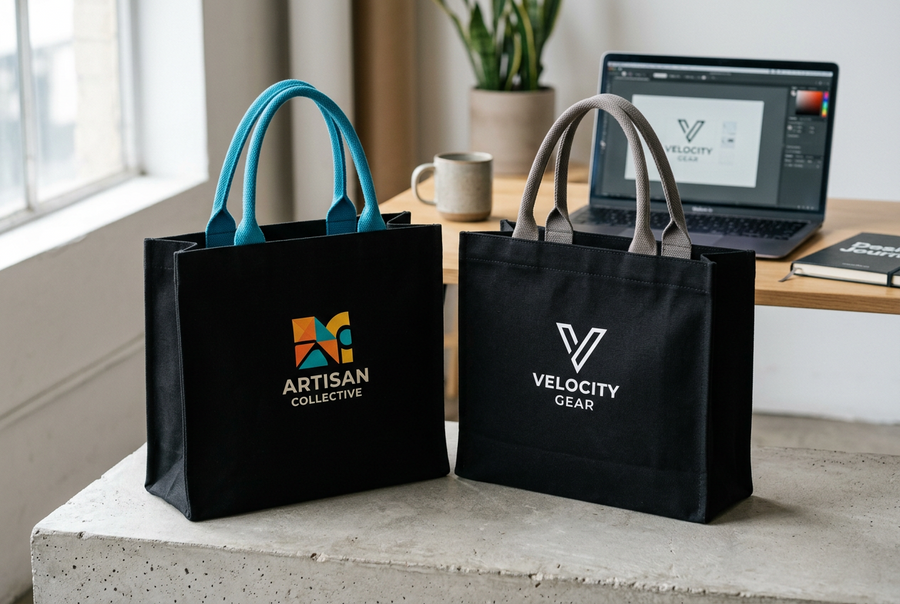
Third: color management across vendors. This is where programs unravel. Your navy blue logo will look different on cotton, ceramic, and ABS plastic unless you specify a Pantone PMS reference for every brand color and send it to every vendor. Do not rely on RGB or HEX values. Request a physical color match sample — a strike‑off for apparel, a printed swatch for drinkware — before approving bulk production.
4. What Goes Wrong (and Why)
The most common failure in startup merch programs is treating all product categories as equivalent in lead time planning. A marketing VP approves a sample, gets a 10‑day estimate from the vendor, and schedules the launch accordingly. Then the drinkware order — placed with the same vendor who specializes in apparel — runs into production delays because the mug decorating is outsourced. The whole program slips.
The second common mistake: using a single vendor for everything without assessing category‑by‑category capability. The vendor says they can do it all. They might be able to — but often at a quality or cost trade‑off that only becomes visible when the shipment arrives. Specialist capability matters more than vendor convenience.
The third: ignoring per‑category compliance certification requirements. Food‑contact ceramics need FDA‑compliant glazes. Electronics require battery safety documentation. Apparel may need flammability testing for certain use cases. If you do not ask for these certificates up front, you will be scrambling two weeks before shipment. Some suppliers cannot produce them at all — and you will not know until it is too late.
5. How to Evaluate Your Options
Start with a Category Compliance Risk Tier assessment. List every product category in your program. Assign each a risk level based on three factors: regulatory requirements, material complexity, and vendor specialization needed. High‑risk categories — electronics, food‑contact items, children's products — need documented compliance before you order. Low‑risk categories — basic apparel, notebooks — have fewer regulatory hurdles but still need quality checks.
Then build your Multi-Category Lead Time Matrix. For each category, get a production lead time estimate from at least two vendors. Factor in shipping time and any consolidation delays. Compare the longest lead time against your program deadline. If they do not align, you have three options: choose different categories, split the shipment, or push the deadline.
Finally, request a Per-Category Decoration Setup Cost breakdown from each vendor. Some methods have a plate or screen fee that changes the economics of small runs. A 50‑unit order with screen printing might cost more per unit than a 200‑unit order because the setup cost is spread across fewer pieces. Understand these numbers before you commit to quantities.
For a multi‑vendor program, confirm whether your suppliers can consolidate orders for single shipment. If not, factor in multiple freight charges and delivery windows. The Multi-Factory Consolidation Model works best when you designate a primary vendor to coordinate the others — but not every supplier offers this service.
6. Frequently Asked Questions
What is the typical lead time for custom hats compared to other merch categories?
Hats with embroidered logos generally run 10–15 business days for quantities under 500 units. This sits at the shorter end of the spectrum. Drinkware with full‑color wraps often takes 20–25 days, while electronics like power banks can stretch to 30 days due to battery testing and certification checks. Always ask for category‑specific lead times rather than a single vendor estimate.
How do decoration methods compare across categories in terms of setup cost?
Screen printing has a low per‑unit cost but a plate fee that makes sense above 100 units. Embroidery requires digitizing the logo — a one‑time cost typically $25–$75. Full‑color digital printing on drinkware has no plate fee but higher per‑unit cost. The right choice depends on your quantity and whether you plan reorders.
What should I request from each vendor before placing a multi‑category order?
Request a physical sample, a decoration proof, and a compliance certificate for each category. For apparel, ask for a wash test report. For drinkware, confirm food‑contact safety. For electronics, request battery and charging safety documentation. Build a vendor scorecard that includes these items so you compare apples to apples.
How do I ensure color consistency across different product categories from different suppliers?
Specify Pantone PMS references for every brand color in your artwork brief. Send the same PMS code to every vendor and request a physical color match sample before production. Do not rely on RGB or HEX values — they translate differently across substrates. A good supplier will offer a physical strike‑off or printed swatch for approval.
Custom merchandise for startups does not have to be complicated. The programs that work are the ones where someone took the time to map categories, assess vendors by capability, and lock in color standards before production started. The ones that fail are the ones where someone assumed it would all just work out.
Make the right calls upfront, and your merch program becomes a asset — not a headache.