Sourcing Simple Custom Merchandise and Bags with Strong Branding Value
1. Matching Fabric, Hardware & Substrates to Event Deadlines
Selecting promotional merchandise for major conferences and trade shows requires matching product substrates to recipient expectations and event timelines. When sourcing carry goods, drinkware, or workspace accessories, the physical material dictates how long an item stays in active use. Choosing flimsy, thin materials risks product failure during the event itself, whereas well-constructed items signal brand quality and operational attention to detail.
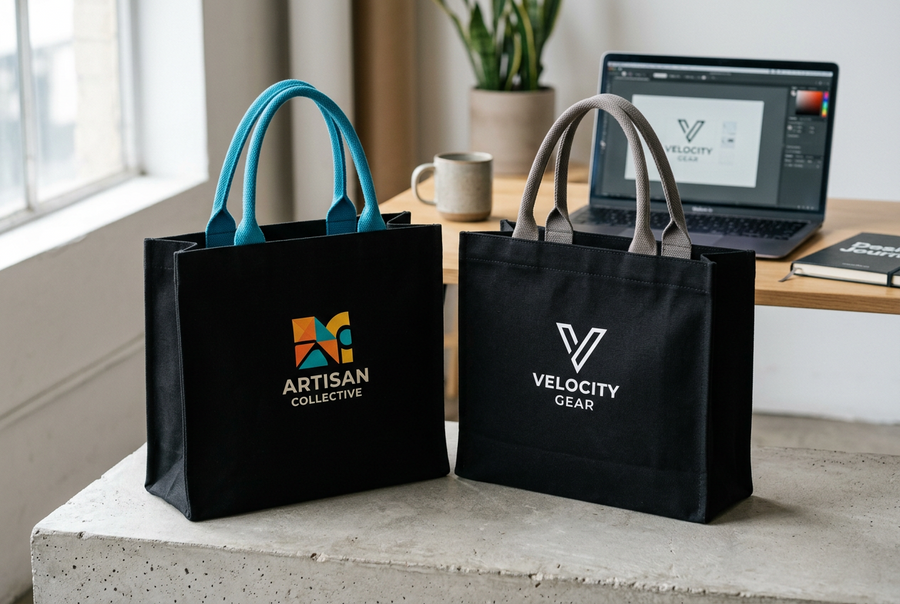
For daily carry items like canvas tote bags—such as a classic Daily Grind Tote Bag in a soft tone like Sweet Pea—material density is the primary baseline specification. Heavyweight cotton canvas provides structural body, ensuring the tote stands upright and supports heavy event catalogs, laptops, and water bottles without seam tearing. Reinforced cross-stitching at the handle anchor points prevents strap detachment under heavy loads. Choosing natural cotton over synthetic non-woven materials delivers a soft, tactile finish that recipients willingly carry to grocery markets, gyms, and daily office commutes.
Definition: Product Retention Utility
Product Retention Utility measures the practical daily value a promotional item provides to its recipient. High-utility items—such as heavy cotton totes, insulated tumblers, and hardcover notebooks—integrate naturally into daily routines, generating thousands of repeated visual impressions over an extended lifecycle.
Drinkware and hard goods require equal material discipline. Double-wall stainless steel construction with vacuum insulation represents the standard for insulated tumblers, maintaining beverage temperatures for hours on trade show floors or work desks. For a more rustic, tactile aesthetic, enamel camp mugs constructed with a heavy steel core and smooth enamel coating offer long-term durability and strong visual appeal on office desks.
2. Managing Batch Consistency and Sizing Across Multiple Locations
A frequent operational challenge in event merchandise procurement is maintaining color and decoration consistency across large production runs. When ordering 2,000 canvas totes or 500 insulated tumblers, subtle variations in fabric dye lots or print ink density can occur between factory batches. Establishing strict pre-production sample sign-offs and Pantone color matching protocols ensures that delivered items maintain complete brand alignment across all event venues.
Wearable accessories like embroidered dad caps simplify event sizing logistics compared to fitted apparel. Unstructured cotton twill dad caps feature low-profile crowns and adjustable closure straps, creating a universal "one-size-fits-most" fit that eliminates the inventory risk of leftover extreme sizes. The soft crown conforms comfortably to different head shapes, making it a popular choice for booth staff uniforms and attendee giveaways alike.
For distributed remote teams or multi-city roadshows, organizing merchandise into structured swag boxes streamlines fulfillment. Rather than shipping bulk master cartons directly to individual field reps, working with a centralized kitting partner allows you to assemble customized kits—combining dad caps, enamel mugs, minimalist notebooks, and phone grips—that are stored and shipped to individual addresses on demand with a few clicks.
3. Event Scenarios: Trade Shows, Campus Giveaways, and Distributed Swag
Selecting the right product mix requires evaluating your specific industry, campaign occasion, and recipient environment. Before finalizing purchase orders, sourcing leads should clarify two foundational questions: What is your industry or niche (e.g., fitness, tech, cafe, art)? Are you looking for merchandise to sell or promotional items to give away? Answering these questions narrows product choices to items that resonate with your specific audience.
Consider these proven product combinations across common event scenarios:
- Trade Shows & Industry Expos: Focus on high-capacity carry goods and desk accessories. Heavyweight canvas tote bags allow attendees to consolidate literature collected across the exhibit hall, while minimalist hardcover notebooks and insulated tumblers provide long-term desk visibility long after the show closes.
- Distributed Remote Team Swag: Prioritize tactile daily touchpoints. Customized swag boxes containing embroidered dad caps, enamel camp mugs, phone grips, and custom phone cases deliver a cohesive welcome experience directly to home workstations.
- Campus & Student Programs: Emphasize budget-friendly, high-frequency accessories. Kiss-cut sticker packs allow students to personalize laptops, water bottles, and notebooks, while textured woven patches elevate basic backpacks and denim jackets.
Aligning product formats with recipient habits ensures your merchandise achieves continuous, natural visibility rather than sitting forgotten in a storage closet.
4. Comparing Decoration Methods Across Branding Surfaces
Applying brand graphics effectively requires matching the decoration technique to the substrate surface. A branding method that works cleanly on a smooth metal tumbler will produce poor results if forced onto a textured canvas weave or a hardcover notebook. Evaluating visual finish, setup expenses, and durability prevents pre-production errors.
| Product Substrate | Recommended Decoration Method | Visual / Tactile Result | Primary Sourcing Benefit |
|---|---|---|---|
| Heavyweight Cotton Canvas | Spot-Color Screen Printing / Woven Patch | Bold, crisp ink coverage; textured patch edge | Large imprint area; vibrant logo reproduction |
| Insulated Stainless Steel | 360° Wrap Screen Print / Laser Engraving | Seamless graphic wrap; permanent metallic mark | High durability; withstands daily handling and washing |
| Cotton Twill Dad Caps | Direct Flat Embroidery / Woven Patch | 3D thread texture; sharp graphic definition | Structured, refined look; outlasts garment life |
| Hardcover Notebooks | Blind Debossing / Metallic Foil Stamping | Recessed tactile imprint; crisp metallic accent | Professional aesthetic; subtle desk presence |
| Enamel Camp Mugs | Spot Color Print with Rim Accent | Smooth, glossy finish; rustic aesthetic | Classic look; high perceived value |
On minimalist notebooks, blind debossing presses your logo cleanly into the cover material, creating a subtle, recessed imprint that feels elegant in corporate settings. On insulated tumblers, wrap-around screen printing maximizes branding real estate across the entire curved surface. Adding small, tactile accents like woven patches to canvas bags or apparel adds a textured element that elevates standard promotional items.
5. Managing Lead Times, Sourcing Costs, and Venue Freight Cutoffs
Executing an event order successfully depends on strict logistics management. Event dates are non-negotiable deadlines; a shipment arriving one day after a trade show closes is a complete loss. Managing lead times requires accounting for proofing windows, factory production cycles, and transit schedules.
Trade Show Freight & Delivery Checklist
- Confirm advance warehouse receiving dates and specific booth location numbers with show management.
- Verify whether venue docks require certified liftgate service or scheduled delivery appointments.
- Label all master cartons with official trade show shipping tags indicating booth number and company name.
- Buffer production schedules by 5 to 7 business days to account for potential weather or freight transit delays.
- Request tracking numbers and bill of lading (BOL) documentation from carriers prior to event setup days.
Standard domestic production for decorated canvas totes, tumblers, and embroidered caps generally requires 10 to 15 business days following proof approval. Custom manufacturing—such as custom-dyed fabrics, bespoke swag boxes, or specialized metal hardware—requires 30 to 45 days. Establishing clear production milestones and scheduling freight deliveries to arrive at advance event warehouses eliminates the stress of last-minute dock arrivals.
6. Quality Inspection, Proofing Protocols, and On-Site Kit Execution
The final phase of event merchandise procurement centers on physical quality control and on-site distribution readiness. Inspecting production samples before goods ship to the venue protects your investment and ensures that delivered merchandise meets approved brand standards.
When reviewing pre-production e-proofs and physical sample units, perform these critical checks:
- Print & Embroidery Registration: Verify that multi-color prints align precisely without bleeding or color gaps, and check that embroidery thread tension remains smooth without puckering fabric.
- Substrate & Seam Integrity: Check canvas tote handles, notebook bindings, and cap adjustment straps to ensure mechanical seams hold under tension.
- Color Accuracy: Compare printed ink colors and thread shades against official Pantone brand guidelines under standard daylight conditions.
- Packaging & Labeling: Ensure master cartons are clearly labeled with item counts and size breakdowns to simplify booth staging.
By prioritizing high-utility products, selecting durable substrates, enforcing strict proofing protocols, and managing venue delivery cutoffs, marketing teams can execute memorable event campaigns that engage audiences and deliver lasting brand value.