How to Choose a Low-Risk Product for Your First Launch: Tech Merch Sourcing
1. Choosing Small, Lightweight, Low-Friction Items
Launching a new product line or company merchandise program comes down to managing exposure. What niche or industry are you thinking about, and what is your starting budget? When capital is limited, committing funds to bulky, heavy, or mechanically complex items introduces immediate logistical friction. A product that occupies significant physical volume costs more to transport from the factory, costs more to warehouse, and incurs heavy parcel shipping surcharges when distributed to individual employees or customers.
The simplest way to protect your starting budget is to focus on low-friction categories: items that are compact, light, simple to manufacture, and easy for the recipient to understand. Small tech accessories—such as adhesive silicone phone wallets, compact phone stands, and universal grip attachments—fit this profile cleanly. Because these items weigh only a few ounces and ship in flat mailers, freight expenses remain minimal even when shipping across international zones.
Low-Friction Product Category
A Low-Friction Product Category consists of merchandise that requires minimal initial tooling capital, features universal compatibility without individual sizing curves, and carries negligible shipping and storage costs due to a compact physical footprint.
What actually determines whether a first product launch succeeds is how quickly the end user understands its value. Choosing familiar formats—like a basic phone accessory, a reliable ceramic mug, or a clean graphic tee—means you do not have to educate your audience on how to use what they just received. The recipient opens the package, recognizes the utility immediately, and integrates it into their daily routine.
If minimizing initial capital risk is your main priority, sticking to flat, lightweight accessories is usually the simpler choice; you gain predictable fulfillment economics and avoid the high storage overhead that can quickly drain early cash reserves.
2. Passive Accessories vs. Complex Electronics
When teams explore the tech accessories space, there is often a temptation to launch powered electronic devices—such as lithium-ion power banks, wireless charging hubs, or Bluetooth audio gear. While powered gadgets carry high perceived value, they also introduce complex regulatory hurdles, safety certification costs, and strict freight compliance rules. Lithium batteries are classified as dangerous goods in air freight, adding hazardous material surcharges and customs inspection delays that complicate an initial launch.
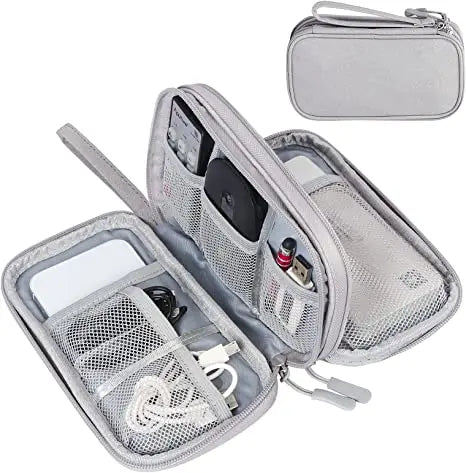
For a low-risk first launch, passive, non-powered tech accessories offer a far cleaner operational path. Items like snap-on phone stands, polycarbonate phone card holders, and molded cable organizers require no electrical safety certifications, contain no hazardous battery chemistry, and carry zero risk of thermal failure. They deliver genuine daily utility around digital devices without the engineering and legal overhead of active electronic components.
Before selecting a technical accessory, audit the manufacturing inputs. High-impact polycarbonate, flexible thermoplastic polyurethane (TPU), and food-grade silicone provide durability, clean surface aesthetics, and broad chemical stability across diverse office and home environments.
3. Eliminating Sizing Friction
For corporate marketing coordinators and HR talent teams, managing product fit is one of the most frustrating aspects of merchandise distribution. Sized apparel lines require collecting individual size preferences across small, medium, large, and plus sizes prior to ordering. When headcount shifts, or when extra units are ordered based on generalized demographic curves, companies inevitably end up with boxes of unsold or unwearable garments in extreme sizes.
What is the easiest low risk business to start or product to roll out? Sourcing universal, non-sized products completely eliminates size-related friction. A custom phone grip, a desktop cable weight, or a branded phone wallet fits universally, regardless of who receives it. This makes non-sized accessories the ideal choice for corporate gifting occasions, large-scale conference giveaways, and remote employee welcome kits.
Universal Non-Sized Accessories
- Zero sizing inventory mismatch or dead stock.
- Immediate distribution without pre-order surveys.
- Negligible return and exchange overhead.
- Compact packaging for easy desk or mailer drops.
Sized Garments & Fitted Items
- Requires accurate size curve forecasting.
- High return rates driven by fit discrepancies.
- Leftover buffer inventory in fringe sizes.
- Higher freight bulk per individual unit.
By removing sizing complexity, procurement teams can order exactly the quantity needed for immediate distribution without maintaining an expensive buffer stock to handle sizing exchanges.
4. Print Methods for Compact Surfaces
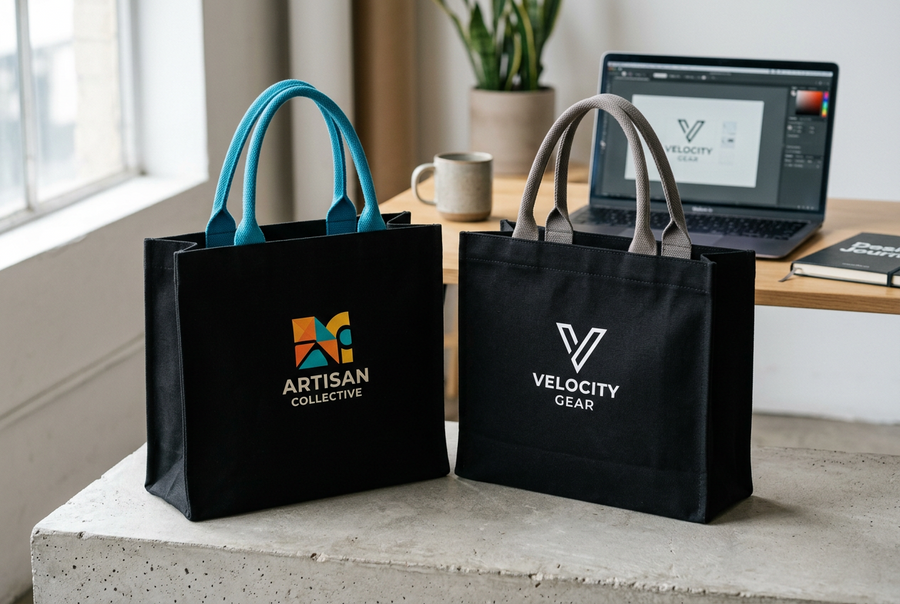
Applying custom branding to compact tech accessories requires choosing a decoration technique that delivers sharp line definition on smooth synthetic surfaces. Because phone accessories sit in hands and rest on desks throughout the day, the imprint must resist friction, finger oils, and constant pocket abrasion.
Three primary decoration methods dominate low-risk tech accessory manufacturing:
- Full-Color Direct UV Printing: Direct UV printing utilizes ultraviolet-curable inks applied via precision print heads. It cures instantly under UV light, allowing for full-bleed, multi-color photographic artwork on flat plastic and silicone phone cases with zero screen setup fees.
- Spot-Color Pad Printing: Ideal for curved or irregular surfaces like rounded phone grips. Pad printing transfers ink via a soft silicone pad, providing sharp, high-opacity single-color or two-color logos at economical rates on volume runs.
- Laser Etching: The preferred choice for anodized aluminum phone stands or metallic accents. The laser cleanly vaporizes the top coating, leaving a permanent mark that will never rub off or fade over time.
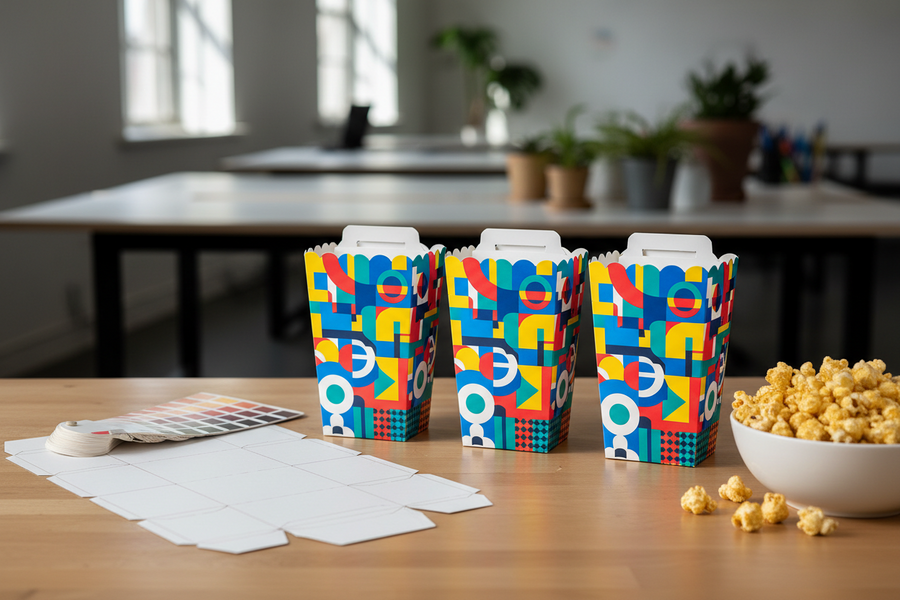
When designing graphics for compact surfaces, prioritize simple, bold iconography over dense paragraphs of text. A crisp, centered brand mark or geometric pattern ensures instant brand recall every time the user picks up their device.
5. Testing Before Capital Deployment
A common trap when deciding how to decide which product to launch is relying on personal bias. Building an item simply because you like the color or design concept puts capital at risk. Sustainable sourcing relies on objective demand validation: confirming that your audience actively wants what you plan to produce before placing factory purchase orders.
Applying the classical 5 P's of Product Marketing—Product, Price, Place, Promotion, and People—structures your validation process:
- Product: Selecting a functional, high-utility accessory that solves an everyday problem, such as securing a phone during video calls or carrying transit cards.
- Price: Setting a target price point that covers landed manufacturing costs, freight, and packaging while remaining an impulse-friendly purchase.
- Place: Choosing distribution channels, such as direct corporate distribution, event handouts, or an online shop.
- Promotion: Highlighting real-world use cases through clean imagery, product video demonstrations, and unboxing clips.
- People: Defining the exact user cohort—whether remote software engineers, field sales reps, or conference attendees.
To confirm what product is most in demand right now, evaluate search volume using keyword tools, monitor community forums to identify recurring frustrations with existing gear, and test concepts using simple waitlists or social media polls. Letting data confirm interest prevents costly inventory missteps.
6. Preserving Cash Flow
Factory minimum order requirements dictate how much cash is locked up in an initial merchandise order. Traditional contract manufacturing often demands minimum commitments of 1,000 to 5,000 units to achieve favorable per-unit economics. For a first launch, committing to massive volume before validating sales velocity creates significant financial exposure.
Working with suppliers who accommodate small batches (50 to 250 units) or offer print-on-demand fulfillment allows you to launch with minimal upfront outlay. While the per-unit cost on a 100-piece run may sit slightly higher than a 5,000-piece container order, the total capital at risk is dramatically lower. You gain the freedom to test two or three distinct product designs simultaneously, evaluate real-world feedback, and direct larger purchase orders toward the clear winner.
Low-Risk Sourcing Validation Checklist
- Verify that the product weighs under 8 ounces and fits within standard flat-rate parcel mailers.
- Confirm the item requires no complex sizing selections or user instruction manuals.
- Check that the manufacturing method uses passive materials without battery compliance overhead.
- Secure digital artwork proofs to confirm print sharpness and color contrast before press setup.
- Negotiate a low-MOQ test run (under 250 units) to validate product reception before scaling volume.
Once initial batches sell through or earn positive feedback across your organization, volume scaling becomes a straightforward calculation based on proven demand.
7. Post-Sale Support, Return Risk & Warranty Expectations
The true cost of a product launch includes post-delivery support and return processing. When a product is mechanically fragile or relies on moving components, customer service overhead can rapidly consume program margins. Choosing durable, monolithic items—such as solid-cast metal stands or one-piece silicone phone wallets—minimizes the likelihood of mechanical failure and product returns.
Because universal tech accessories carry zero sizing ambiguity and feature durable, solid-state construction, return rates remain near zero. This operational simplicity frees your team to focus on core marketing initiatives and customer engagement rather than troubleshooting replacement shipments or processing sizing refunds.
By prioritizing compact, lightweight items, validating demand through search trends, utilizing low-MOQ production tiers, and avoiding sizing complexity, corporate buyers and brand founders can execute an initial product launch that protects starting capital and delivers dependable commercial results.