Custom Corrugated Mailer Box for Apparel | MOQ 1,000 pcs

Custom Corrugated Mailer Box for Apparel | MOQ 1,000 pcs

low as: $0.11
color
size
Thickness

Request a Wholesale Quote:

(Kindly fill below form for quote in 5min or enquiry)
✓ Your enquiry has been sent successfully! We'll reply with a quote shortly.

Sourcing Snapshot: Custom Corrugated Mailer Boxes

  • MOQ: 1 pc (sample), 1,000 pcs (bulk)
  • Lead Time: 15 days (1–1,000 pcs)
  • Material: 250–350gsm CCNB/C1S + E/B Flute
  • Key Spec: Custom Sizes, Flat-Packed
  • Decoration: 4C Print, Foil, Emboss, UV
  • Compliance: Documentation available upon request

Attribute Data Matrix

Attribute Specification Notes
Material 250–350gsm CCNB/C1S paper + E/B flute corrugated Coated exterior for printing, corrugated core for strength.
Box Type Folders / Mailer Box Ships flat for assembly at destination.
Size Custom Size Accepted Provide product dimensions for a tailored fit.
Printing 4C (CMYK) / Pantone Full-color or brand-specific spot color.
Finishing Lamination, UV, Emboss, Foil Stamp Multiple finishes can be combined.
Liner Options Plastics, Paperboard, Sponge For product protection and presentation.
Accessories Ribbon, Handle Integrated for a premium unboxing.
Sample Time 3–7 Working Days After artwork and sample fee are confirmed.
Production Lead Time 15 days for 1–1,000 pcs After sample approval and deposit.
Unit Weight (Sample) 0.098 kg (for 15x10x5cm box) Weight varies with final size and material.
Origin Guangdong, China Factory-direct manufacturing zone.

Technical Comparison: Coated vs. Kraft Mailer Boxes

When evaluating packaging, the choice between a coated box (like this one) and a standard kraft mailer is a trade-off between presentation and cost. A kraft mailer uses unbleached, uncoated paper, which is a lower-cost material. It offers a natural, rustic look and is excellent for simple, one-color printing.

This box, however, uses a 250–350gsm CCNB or C1S paper on its exterior. This clay coating creates a smooth, non-porous surface. The technical advantage is significant: it accepts high-resolution 4-color process printing and premium finishes like soft-touch lamination, spot UV, and foil stamping, which are not feasible on raw kraft paper. The corrugated E-flute or B-flute core provides a comparable level of structural protection. The choice depends on whether your packaging needs to be a protective container or a brand-building asset. For a premium apparel brand, the coated surface offers a broader canvas for design. Documentation for material composition can be provided for your destination market's requirements.

Multi-Scenario Buyer Applications

Scenario 1: The Subscription Apparel Brand

A marketing manager at a subscription-based sock or underwear company would evaluate this box to serve as the monthly touchpoint with customers. Their focus is on brand reinforcement and the unboxing experience. Before ordering, they would need to confirm the box's internal dimensions are sufficient to hold the folded garments without crushing them. A custom-printed interior, perhaps with a "thank you" message, would be a key consideration. They would likely select a matte lamination finish for a soft, modern feel and use a spot UV on the logo for a subtle, tactile highlight. They'd need to confirm the 15-day lead time is sustainable for their recurring production schedule and request a sample to test the folding process and mailer durability.

Scenario 2: The Corporate Gifting Coordinator

A procurement specialist at a corporate gifting agency would source this box to package a high-value client gift, such as a branded polo shirt and a tumbler. The goal is to create a premium, memorable presentation that reflects the client's brand. They would need to confirm the box can be custom-sized to fit the specific items snugly, likely with a custom sponge or paperboard insert to prevent movement. The decision would favor luxury finishes: gold foil stamping for the client's logo and a soft-touch lamination on the exterior. They would inquire about the availability of branded tissue paper and a ribbon closure to complete the package. A pre-production sample would be non-negotiable to verify the quality of the finishes before the full order.

Scenario 3: The E-commerce Operations Manager

An operations manager for a direct-to-consumer dress brand would view this box as a replacement for standard poly mailers. Their primary concerns are cost-efficiency in shipping and product protection. They would need to verify the flat-packed shipping volume to calculate storage space at their 3PL warehouse. They would compare the single-unit weight (e.g., ~100g) against a poly mailer to assess the impact on shipping costs. While the box itself may be more expensive, they would weigh this against its role as a marketing tool that reduces the need for extra branded inserts. An easy-tear opening strip would be a crucial feature to specify to ensure the end customer can open the package without damaging the product inside.

Frequently Asked Questions

Q: Can I get a sample with my artwork before committing to a full order?

A: Yes. The process is: 1) Provide your vector artwork and box dimensions. 2) The factory creates a digital mock-up for your approval. 3) A physical sample is produced (sample time is 3–7 working days) and shipped to you via express. 4) Once you approve the sample and pay the production deposit, the 15-day manufacturing timeline for orders up to 1,000 pcs begins.

Q: What are the shipping options and estimated transit times for a bulk order?

A: For a bulk order of flat-packed boxes, sea freight is the most economical choice. You have two options: 1) FCL (Full Container Load) if the volume is large enough, or 2) LCL (Less than Container Load) for smaller volumes. Transit time from Guangdong to a US West Coast port is typically 20–30 days, plus customs clearance. Express air shipping is only recommended for samples or urgent, small orders due to higher cost.

Q: What payment methods are accepted, and what is the standard payment schedule?

A: The standard payment schedule is a 30% deposit by T/T (telegraphic transfer/wire) to initiate production after final artwork and sample approval. The remaining 70% balance is due before the goods are released for shipment. This balance is typically paid after you have reviewed and approved the pre-shipment inspection report or post-production photos. Other payment methods may be discussed based on the order value.

Q: How can I be confident in the quality of the final production run?

A: Quality is ensured through a multi-step process. It starts with your approval of a physical pre-production sample, which serves as the quality benchmark. During production, the factory QC team monitors printing and die-cutting. Before shipment, you have the option to hire a third-party inspection company (like SGS) to conduct a pre-shipment inspection on-site. They will check a random sample from the production batch against the approved sample, verifying print quality, dimensions, and workmanship.

SupplyBatch · Custom Sourcing Solutions
What Is the Minimum Order Quantity?1 ·units Who This Product Works Best For?Marketing Director at a mid-size apparel brand — sourcing packaging for a new seasonal collection launch.
E-commerce Manager at a DTC underwear or loungewear company — looking to upgrade from poly mailers to a branded unboxing experience.
Founder of a subscription box service — needing a durable, custom-printed mailer box that fits through standard mail slots.
Procurement Manager at a corporate gifting company — sourcing presentation boxes for client appreciation kits.
Brand Manager at a footwear or accessory company — developing premium packaging for a limited-edition product drop.
Operations Manager at a fashion boutique chain — sourcing branded boxes for in-store purchases and local delivery.
HR or People Ops Manager — creating a welcome kit with branded packaging for new employee onboarding.
Where and How It's Made?

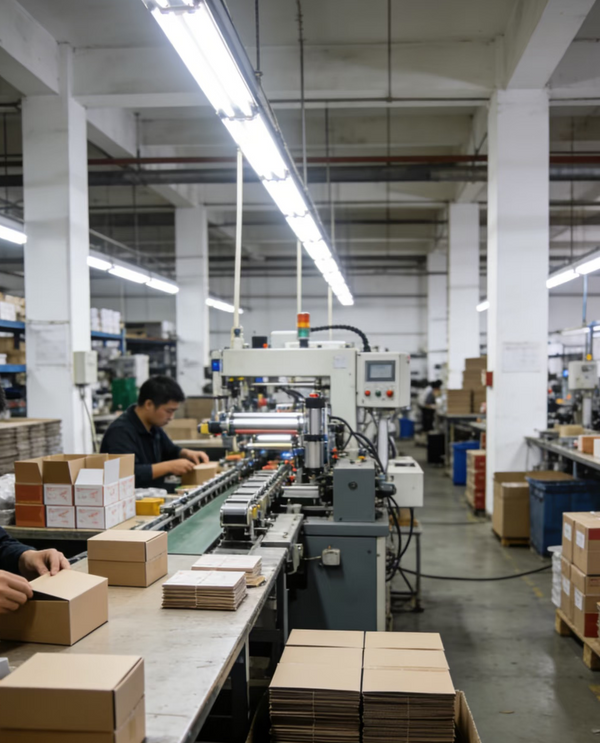
The foundation of this custom box is 250–350gsm CCNB or C1S paper, sourced from established mills in Guangdong, China. This paper is laminated to an E-flute or B-flute corrugated board, creating a composite material that balances a smooth, print-ready exterior with a rigid, protective core.


Secondary components are selected to match the box's intended application. Interior liners can be specified in paperboard, sponge, or plastics to cradle and protect the packaged item. For a premium unboxing experience, accessories like ribbons and handles can be integrated into the design. The primary manufacturing process is die-cutting, which forms the flat paper components into the final box structure with precise folds.


The production process follows a defined QC workflow. It begins with incoming material inspection, checking the paper's GSM and the corrugated flute's integrity. Throughout printing and die-cutting, checkpoints ensure color consistency and dimensional accuracy. A final inspection occurs after gluing and assembly, prior to packing. Buyers can request pre-shipment inspection reports for their specific order.


The factory's environmental approach focuses on material selection. The primary corrugated paper is a recyclable material, aligning with common corporate sustainability goals. Specific environmental certifications for the facility are not listed in the source data and can be requested during the sourcing process.

What You Need to Know?The most consequential decision for this box is the material combination: 250-350gsm CCNB/C1S paper over a corrugated flute. If your priority is a high-impact, retail-quality print with premium finishes (like foil or spot UV), the coated CCNB/C1S paper is the right choice. If the box is primarily for protective shipping with a simpler one-color print, a standard kraft material could be a more budget-conscious alternative.


For a first order, the 1,000-unit tier is the most practical entry point for production. It balances a reasonable per-unit cost with a manageable inventory commitment. Plan your project timeline around the 15-day production window after sample approval, and add 3-7 days for that sample to be created and delivered. If you are coordinating a launch, this 3-week buffer before shipping is a critical path item.


A final choice is the box style. The "Folders" style (likely a two-piece lid-and-base or a tuck-top mailer) is efficient for flat-packing and assembly. If you need a more robust, crush-resistant structure for a heavier item, a full "slipcase" or "rigid box" style would be a different product category to explore.

This custom corrugated mailer box turns standard apparel packaging into a branded unboxing event. Built from 250-350gsm coated paper over an E-flute core, it offers a smooth, print-ready surface and the structural integrity needed for shipping dress shirts, dresses, or subscription apparel. Each box is made to order, with custom dimensions to fit your product securely.


SupplyBatch makes the sourcing process straightforward. We connect you with factories that support low MOQs for custom runs and provide a clear path from artwork to sample to production. Every order can include a pre-shipment inspection, ensuring the final boxes match your approved design before they ship.

Why Companies Choose This Product? → Material specification of 250-350gsm CCNB/C1S paper over E/B-flute corrugated provides a dual benefit: a smooth, high-quality printing surface and the structural strength needed for shipping.
→ A full suite of in-house finishing options—including gloss/matte lamination, spot UV, embossing, debossing, and gold/silver foil stamping—allows for complex, multi-texture designs in a single production run.
→ The supplier accepts orders from 1 piece for sampling, enabling buyers to validate material quality and workmanship before committing to a production volume.
→ Custom sizing is a standard capability. Each box is engineered to the exact dimensions of the product it will hold, optimizing material usage and ensuring a secure fit.
→ SupplyBatch provides a pre-production digital or physical sample approval process, ensuring the final product matches the design intent before mass production begins.
→ Boxes are shipped flat-packed in K=K standard export cartons, a method that significantly reduces shipping volume and cost compared to pre-assembled boxes.
→ For enterprise accounts, SupplyBatch offers a dedicated account manager to streamline recurring orders and ensure consistency across production runs.
Is This the Right Choice for Your Business? MARKET POSITIONING: This product sits in the custom, mid-to-high tier of paper packaging. Its position is defined by the use of 250-350gsm coated paper (CCNB/C1S) over standard kraft paper and the availability of advanced finishing techniques like foil stamping, embossing, and spot UV. This allows for a presentation-quality box suitable for retail and gifting, beyond basic protective shipping.

PRICE BENCHMARK: Not specified by supplier — verify before quoting.

MOQ ADVANTAGE: The supplier accepts orders from 1 pc for sampling, which is a lower barrier than many factories that require a minimum order for custom work. For production, the pricing tier is established at 1,000 units, a common volume for custom-printed packaging runs.

COMPETITIVE DIFFERENTIATION:
- The material specification of 250-350gsm CCNB/C1S paper combined with E/B flute corrugated offers a dual benefit: a high-quality printing surface for brand presentation and structural rigidity for product protection.
- A full suite of decoration options—including foil stamping, embossing, and spot UV—is available in-house, simplifying the supply chain for complex, multi-finish designs.
- Custom sizing is a standard offering, not an exception, allowing for packaging tailored to specific apparel or product dimensions.
How Businesses Use This Product? Apparel E-commerce Shipping: A durable, branded mailer box that protects garments during transit and creates a positive first impression upon delivery.
Subscription Box Packaging: A recurring mailer box designed for monthly delivery, featuring easy-tear opening options and consistent branding.
Retail In-Store Packaging: A high-quality gift box for boutique clothing or accessories, enhancing the perceived value of the purchase.
Corporate Welcome Kits: A custom-printed box used to package a branded item (like a hoodie or notebook) for a new employee or client onboarding program.
Influencer & PR Gifting: A presentation-focused box used to send products to influencers or media, designed for a memorable unboxing experience.
Limited-Edition Product Drops: A uniquely designed box for a special product release, using premium finishes like foil stamping to create a collector's item.
International E-commerce Fulfillment: A flat-packed, lightweight box that is cost-effective to ship to a 3PL warehouse overseas for local fulfillment.
Materials, Construction & Specifications
MATERIAL PRIMARY: 250-350gsm CCNB (Clay Coated News Back) or C1S (Coated One Side) paper, + E-flute or B-flute corrugated board.

MATERIAL SECONDARY: Liner options include Plastics, Paperboard, or Sponge. Accessories include Ribbon and Handle.

PERFORMANCE PARAMETERS:
- Paper GSM: 250-350 gsm
- Corrugated Flute: E-flute (approx. 1.5mm) or B-flute (approx. 3mm)
- Single Unit Gross Weight: 0.098 kg (for 15x10x5 cm sample size)

STANDARD DIMENSIONS: Sample size 15 x 10 x 5 cm. Custom dimensions are accepted based on product size.

CUSTOMIZABLE DIMENSION RANGE: Fully customizable to fit product dimensions. No min/max range specified by supplier — verify before quoting.

WEIGHT PER UNIT: Varies by size and material. Sample: 0.098 kg.

PRINT AREA DIMENSIONS: Full-surface printing available. Exact dimensions depend on box size and die-cut lines.

SURFACE TREATMENT OPTIONS: Glossy/Matte/anti-scratching/textured lamination, Glossy/Matte UV oil, Embossing/Debossing, Gold/Silver foil stamping, Spot UV.

COLOR OPTIONS: Full CMYK process or Pantone (PMS) color matching.

DIMENSIONAL TOLERANCE: ±1-2mm is typical for corrugated die-cut boxes. Confirm with supplier for critical dimensions.

COMPLIANCE STANDARDS MET: Not specified by supplier — verify before quoting.
Manufacturing Details
1. Material Sourcing & Prep: 250-350gsm CCNB/C1S paper and E/B-flute corrugated board are sourced and inspected for GSM, thickness, and surface integrity.
2. Printing: Artwork is printed onto the paper stock using a 4-color (CMYK) offset process. Pantone color matching is available for precise brand colors.
3. Surface Finishing: Printed sheets receive specified finishes. This may include lamination (gloss/matte/textured), UV coating, embossing/debossing, or foil stamping.
4. Die-Cutting & Creasing: Flat sheets are cut to shape and creased along fold lines using a custom steel die. Tolerances are typically ±1-2mm.
5. Gluing & Assembly: The die-cut sheets are glued at the side seam and, if applicable, the bottom flaps.
6. QC & Packing: Finished boxes are inspected for print quality, structural integrity, and finish consistency before being flat-packed into K=K export cartons.
Technical note: Artwork files should be supplied in AI, PDF, or PSD format. Use CMYK color mode, 300 DPI resolution for raster images, and include 3mm bleed on all sides.
Packaging, Carton & Shipping Details
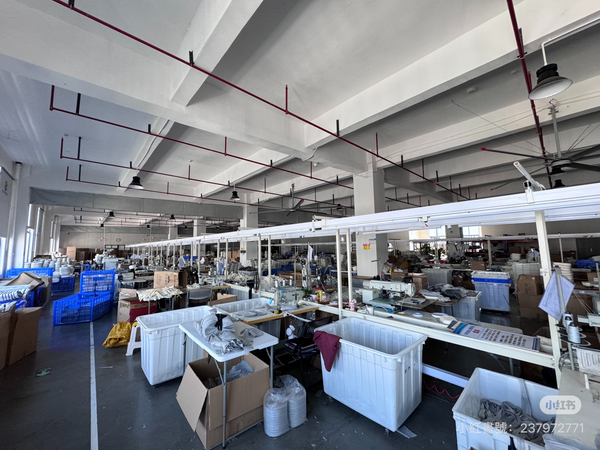
ORIGIN & FACTORY TYPE: Guangdong, China — Direct manufacturer specializing in custom paper packaging.

INNER PACKAGING: Boxes are shipped flat-packed to minimize volume. The standard export packaging is a K=K (double-wall) corrugated carton.

MASTER CARTON: Units per carton are dependent on the final box dimensions. The master carton dimensions and gross weight are calculated based on the order's specific configuration.

PALLET SPEC: For orders of 500+ units, flat-packed boxes can be palletized for efficient container loading. Pallet configuration (e.g., 1.2m x 1m or 1.2m x 0.8m) is optimized for the order volume.

EXPRESS SHIPPING: Available for samples and urgent small orders via carriers like DHL, FedEx, or UPS. Typical transit is 3-7 business days depending on destination.

SEA FREIGHT: Recommended for bulk orders to optimize unit cost. Both FCL (Full Container Load) and LCL (Less than Container Load) are available. Transit times are typically 20-35 days to major US/EU ports, plus customs clearance.

REQUIRED DOCUMENTATION: Standard export documents include Commercial Invoice, Packing List, and Bill of Lading. A Certificate of Origin can be provided upon request. Certifications for specific compliance standards are not listed; documentation available upon request.

HS CODE CATEGORY: 4819.10 — Cartons, boxes and cases, of corrugated paper or paperboard. Duty rates vary by country and trade agreements. Confirm with a customs broker for your specific destination.

IMPORT COMPLIANCE NOTES: The product is made from recyclable corrugated paper. Buyers should verify if their destination market has specific labeling or material restrictions for packaging.

QUALITY GATE: Standard pre-shipment inspection (PSI) can be arranged. AQL 2.5 for major defects and AQL 4.0 for minor defects is a common standard. Inspection costs are borne by the buyer.
How Much Should You Order?
STARTER 1–500 pcs: Ideal for a new product launch or a small-batch gift program. | Lowest MOQ for production, unit cost is higher.
SMALL BATCH 500–1,000 pcs: Suitable for seasonal campaigns or a growing e-commerce brand. | Entry-level wholesale pricing applies.
MID VOLUME 1,000–5,000 pcs: Standard production volume for established brands. | Sea freight becomes cost-effective, unit price decreases.
BULK 5,000–10,000+ pcs: Best for large-scale retail rollouts or subscription services. | Best unit economics, palletized shipping, and priority production scheduling.
ENTERPRISE 10,000+ pcs: For multinational brands with ongoing packaging needs. | Custom pricing, dedicated account management, and integrated supply chain planning.
Order Quantities & Volume Options
Minimum 1 pc for sample | Bulk production from 1,000 pcs
Production Schedule & Lead Time
15 business days for 1–1,000 pcs | >1,000 pcs to be negotiated | +3–7 days for samples
Questions Buyers Often Ask

Q: Apparel e-commerce shipping, subscription box packaging, retail unboxing, corporate gift sets, boutique store packaging

A:

**Q: What's the standard AQL for a custom box order, and can I get a third-party inspection?**

A: For bulk packaging like this, a pre-shipment inspection (PSI) is your best tool. The factory standard can be aligned with AQL 2.5 for major defects (like structural failure or misprints over 5mm) and AQL 4.0 for minor ones. You can absolutely hire a third-party agency like SGS or QIMA to do the inspection on-site. Costs vary but typically run $100–$300 per man-day, paid by you. It’s a step worth taking to confirm the finishing matches your approved sample before the balance payment goes out.


**Q: What are the MOQ and payment terms for a first order?**

A: The listed MOQ is 1 piece, which is for a sample. For a full production run, the pricing and lead time are based on quantity, with a key threshold at 1,000 boxes. Standard practice is a 30% T/T deposit to start production after artwork approval, with the 70% balance due before shipment. The final payment is only released after you approve the pre-shipment inspection report or photos of the finished goods.


**Q: What's the realistic timeline from sending artwork to getting the boxes on a ship?**

A: Plan for a 3-part timeline. First, 3–7 working days for the factory to produce a physical sample for your approval. This step is critical. Second, once you approve the sample and pay the deposit, production for orders up to 1,000 boxes takes 15 days. Third, you need to add trucking time to the port and sea freight transit, which can be 20–35 days depending on the destination. The 15-day figure is just for the production phase.


**Q: How do you handle brand colors to make sure the logo is right?**

A: For brand color accuracy, we use Pantone (PMS) color matching. You’ll need to provide the specific PMS numbers in your artwork. For logos and text, vector files (AI or PDF) are required. For foil stamping, the artwork must be a 100% solid black vector file; this is used to create the metal die. It’s important to approve a physical sample before a full run, as colors can look different on a screen versus the final coated paper stock.


**Q: What's the difference between this box and a cheaper mailer?**

A: The key difference is in the material and finish. A standard mailer is often made from uncoated kraft paper or lower-grade corrugated. This box uses 250-350gsm coated paper (CCNB/C1S) on top of a corrugated core. That coated layer is what allows for high-resolution, full-color printing and premium finishes like soft-touch lamination, spot UV, or foil stamping. It’s the difference between a protective shipping container and a presentation piece that becomes part of the unboxing experience.


**Q: Do you provide pre-shipment inspection reports, and what do they include?**

A: Yes, we can arrange a pre-shipment inspection. The report typically includes a visual check of the printing against your approved sample, verification of the dimensions and box structure, and a check of the surface finishing quality. The inspection is based on an AQL sampling plan. While the factory has its own QC process, a third-party report provides an independent verification that’s often required by buyers before releasing final payment.

Why SupplyBatch

Real Craftsmanship, Small-Batch Ready

We don’t just chase scale; we care about the details. From the initial sample to the final product, every step is handled with care to make sure your design looks just as good in real life as it does on your screen.

At SupplyBatch, you’re working with real product pros. We know that custom merch is your brand’s reputation on the line, so we dig into the details: we’ll analyze your artwork, suggest material upgrades for longevity, and double-check your proofing so there are no surprises when the boxes arrive.
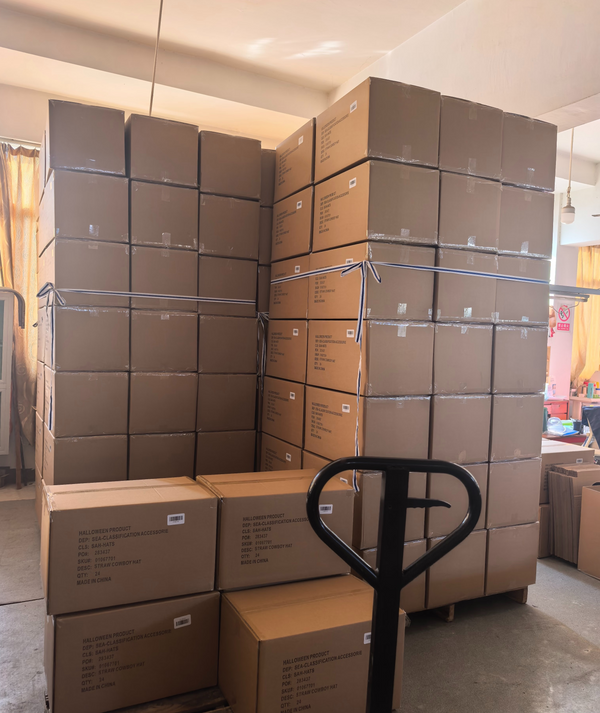
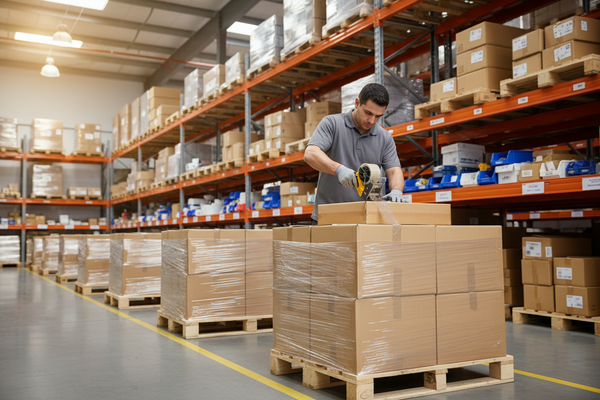
Quality Checked & Shipped Right

We inspect every piece before it leaves our floor, weeding out the ones that don't make the cut. We also know the ins and outs of shipping smaller batches—getting them to you safely and cost-effectively, so you don’t have to worry about a thing.


You bring the vision, and we bring the practical, boots-on-the-ground expertise to turn your ideas into high-quality products that actually hit the mark.

Customization with Brand Services

Customization with a Personal Touch

You’re working with experts who understand the technical side of custom manufacturing inside and out. We don’t just process orders; we act as an extension of your team. Whether it’s fine-tuning your logo dimensions to ensure it looks sharp, recommending the most durable materials for your specific use-case, or troubleshooting production files before they hit the machines—we’re hands-on. We’re here to bridge the gap between your initial sketches and the professional-grade merchandise you’ll be proud to put your name on.
At SupplyBatch, you’re working with real product pros. We know that custom merch is your brand’s reputation on the line, so we dig into the details: we’ll analyze your artwork, suggest material upgrades for longevity, and double-check your proofing so there are no surprises when the boxes arrive. You bring the vision, and we bring the practical, boots-on-the-ground expertise to turn your ideas into high-quality products that actually hit the mark.
You might also like...